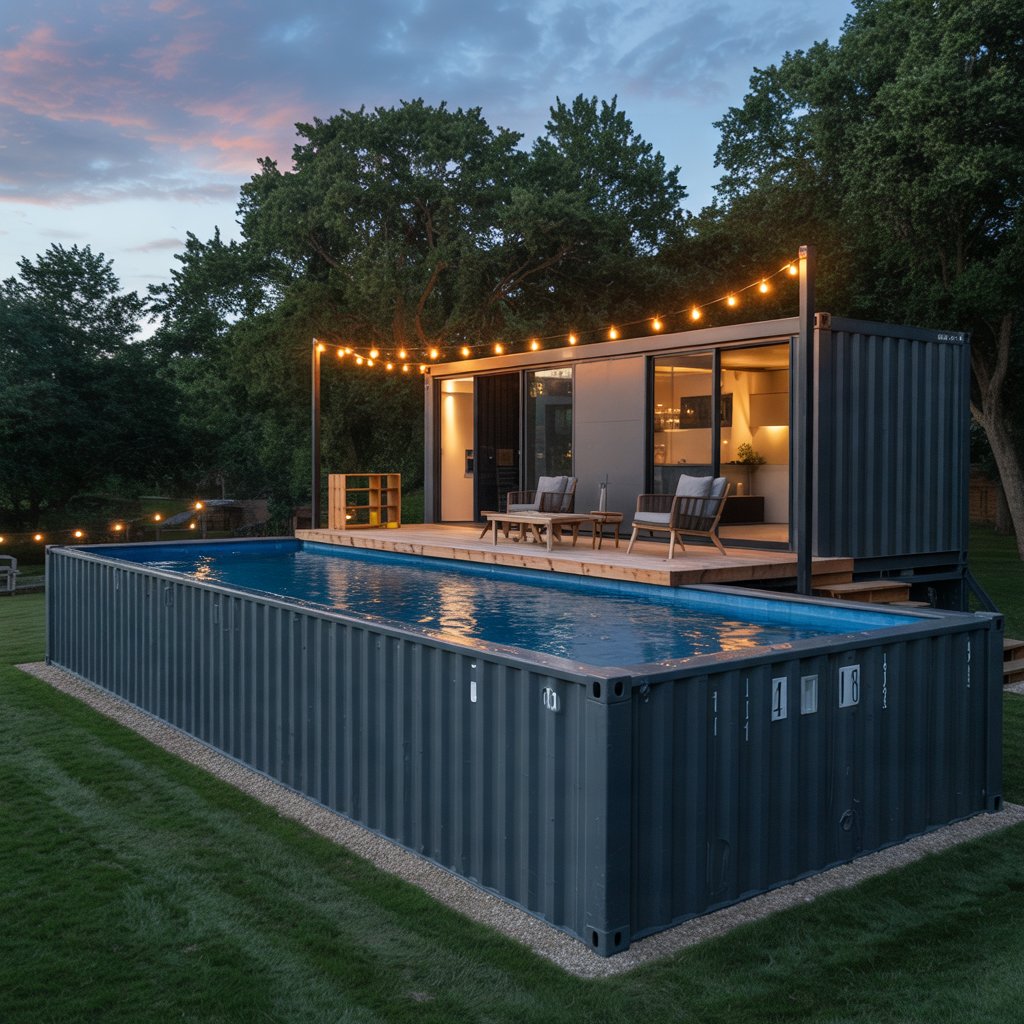
Have you ever looked at a standard backyard and imagined a sleek, modern swimming pool, only to be deterred by the months of excavation and sky-high costs of traditional concrete? Enter the shipping container pool. Repurposing a heavy-duty steel shipping container into a swimming pool has become a popular trend for U.S. homeowners seeking a unique, modular, and potentially faster alternative to standard in-ground builds. But before you order a steel box for your property, it is crucial to understand the real-world costs, local permitting realities, and long-term maintenance involved. A shipping container swimming pool is not always the budget hack it appears to be online. In this ultimate guide, we will break down everything you need to know about container pool installation, from 20-foot and 40-foot sizing to the true container pool cost, permitting hurdles, and whether this innovative backyard feature is the right fit for your home.
What Is a Shipping Container Pool?
A shipping container pool is exactly what it sounds like: a fully functional swimming pool constructed from a repurposed, heavy-duty steel shipping container. Most often, builders use either a standard 20-foot or 40-foot unit. Because these containers are designed to withstand harsh ocean conditions and carry massive cargo loads, they offer a highly durable, pre-engineered shell for water containment.
To transform a raw steel box into a safe and comfortable swimming environment, contractors weld the cargo doors shut (or reinforce them), cut out custom entryways, and install a specialized waterproof liner or structural membrane. The buildout also includes a complete plumbing setup: a circulation pump, a container pool filtration system, skimmers, and return jets. Depending on your climate and preferences, you can also integrate a container pool heater, LED lighting, built-in seating, and surrounding decking to seamlessly blend the structure into your landscape.
How Much Does a Shipping Container Pool Cost in the U.S.?
When researching container pool cost, it is easy to find listings for raw, used shipping containers priced between $2,000 and $5,000. However, a raw container is just the beginning. The reality of a finished, turnkey backyard container pool is significantly higher. Installed costs commonly range from about $35,000 to $65,000 for many standard projects in the U.S. Simpler, above-ground setups with basic finishes can sometimes fall below this range, while highly customized in-ground installations with premium decking and landscaping can easily exceed it.
Additionally, you must factor in local bureaucracy. Container pool permits alone often cost roughly $400 to $2,000, depending on local rules, project scope, and whether engineered site plans are required.
Estimated Cost Breakdown
| Cost Category | Estimated Range |
|---|---|
| Container purchase or conversion | $5,000 – $15,000 |
| Pool delivery and crane costs | $1,500 – $4,000 |
| Site preparation and foundation | $2,000 – $6,000 |
| Excavation (if in-ground) | $3,000 – $8,000+ |
| Plumbing and filtration system | $3,000 – $6,000 |
| Electrical work and bonding | $1,500 – $3,500 |
| Heating system | $1,500 – $4,000 |
| Decking, fencing, and landscaping | $4,000 – $15,000+ |
| Permits and inspections | $400 – $2,000 |
| Annual maintenance | $500 – $1,500 |
Above-Ground vs. In-Ground Container Pools
The placement of your steel pool container dramatically impacts both the aesthetic and the final price tag.
Above-Ground Container Pool
This is the most straightforward and affordable option. It requires lower excavation costs and offers a much faster installation timeline. The trade-off is that the corrugated steel structure remains highly visible. Many homeowners opt to add custom wood cladding, composite siding, or wrap-around decking to improve the aesthetics and provide a place to lounge.
In-Ground Container Pool
Burying the container creates a more integrated, traditional backyard oasis appearance. However, an inground container pool comes with higher site-prep requirements, complex drainage considerations, and significant excavation costs. The surrounding soil exerts immense pressure on the steel walls when the pool is empty, requiring careful structural engineering and backfilling.
Semi-In-Ground Option
Also known as a partially buried pool, this is incredibly useful for sloped yards. By burying one side of the container while leaving the other exposed, you gain design flexibility, natural retaining wall benefits, and a unique multi-level landscaping opportunity.
20-Foot vs. 40-Foot Container Pools
Shipping containers generally come in two standard lengths, and your choice will dictate the pool’s functionality and logistics.
- 20-Foot Container Pool: Measuring roughly 20 feet long by 8 feet wide, this size provides about 160 square feet of swimming space. It is an excellent choice for small backyards, narrow side yards, or homeowners who want a compact plunge pool or a dedicated cooling-off zone. Because of its smaller footprint, it is lighter, easier to transport, and requires less crane clearance for placement.
- 40-Foot Container Pool: At 40 feet long and 8 feet wide, this option offers a long, narrow lane that is highly appealing to lap swimmers. It provides ample room for built-in bench seating and entertaining. However, a 40-foot unit requires a massive flatbed truck for delivery, wide property access, and a heavy-duty crane to maneuver into place. Expect the base price and site preparation costs to scale up significantly compared to the 20-foot model.
Container Pool vs. Traditional Pool
Homeowners frequently weigh the pros and cons of a container pool vs traditional pool builds, such as gunite (concrete) or fiberglass. While a shipping container swimming pool is often marketed as a budget-friendly alternative, the final price can quickly rival a conventional pool once decking, heating, and site work are factored in.
| Feature | Shipping Container Pool | Traditional Pool (Gunite/Fiberglass) |
|---|---|---|
| Typical Installed Cost | $35,000 – $65,000+ | $50,000 – $100,000+ |
| Installation Timeline | 4 to 8 weeks | 2 to 4 months |
| Excavation Needs | Minimal (if above-ground) | Extensive |
| Maintenance | Standard chemical & filter care | Standard chemical & filter care |
| Durability | High (if rust is prevented) | Extremely high (concrete) |
| Design Flexibility | Limited to rectangular 8ft width | Fully customizable shapes & sizes |
| Resale Appeal | Niche (modern/industrial lovers) | Broad, traditional appeal |
| Permit Complexity | Moderate to High (varies locally) | Moderate (well-understood by officials) |
| Best Fit | Sloped lots, modern aesthetics, lap swimming | Large yards, custom freeform designs |
Pros and Cons of Shipping Container Pools
Before signing a contract, it is vital to evaluate the container pool pros and cons objectively.
Pros:
- Faster installation: Much of the structure is pre-engineered, reducing on-site construction time.
- Modular sizing: Standardized dimensions make planning and landscaping more predictable.
- Lower excavation costs: Particularly beneficial if you choose an above-ground installation.
- Modern aesthetic: Offers a unique, industrial-chic look that stands out in suburban neighborhoods.
- Awkward yard suitability: Excellent for narrow lots, sloped terrain, or properties with limited access for heavy excavators.
- Portability: While difficult, an above-ground container pool can technically be drained, craned out, and relocated if you move, unlike a concrete pool.
Cons:
- Steel corrosion risk: If the exterior coating is neglected or scratched, rust can compromise the structure.
- Limited width: You are restricted to the standard 8-foot width of a shipping container, which limits group swimming or playing pool games.
- Insulation challenges: Steel conducts temperature rapidly, meaning the water can get very cold without a robust container pool heater.
- Crane-access issues: You need substantial overhead and lateral clearance to drop the pool into your yard.
- Finishing costs: Custom decking, cladding, and landscaping can quickly erase any initial savings over a traditional pool.
- Less design flexibility: You cannot easily create a kidney-bean shape or a customized beach entry.
Container Pool Installation: Step-by-Step
A successful container pool installation requires careful sequencing. Here is what the process typically looks like:
- Site Evaluation: A professional assesses your soil type, drainage patterns, and overhead clearance.
- Placement Strategy: You choose between above-ground, semi-inground, or in-ground placement based on your yard’s topography.
- Permitting and Utility Locating: You submit engineered plans to your local building department and have underground utilities marked (e.g., calling 811).
- Foundation Preparation: A compacted gravel base, concrete piers, or a full reinforced concrete slab is poured to support the immense weight of the water-filled steel container.
- Delivery and Crane Placement: The modified container is delivered via flatbed and carefully hoisted onto the foundation.
- Plumbing and Electrical: Trenches are dug for the container pool filtration system, pump, and heater.
- Liner and Filling: The waterproof membrane is installed, and the pool is filled with water to test for leaks.
- Safety and Inspections: Fencing, a pool safety barrier, and final municipal inspections are completed.
- Finishing Touches: Decking, landscaping, and exterior cladding are added to complete the backyard oasis.
Note: Professional placement, plumbing, and electrical work are strongly recommended. Pool electrical systems must meet strict safety requirements, including proper bonding and grounding practices mandated by the National Electrical Code (NEC) to prevent electric shock hazards.
Do You Need a Permit for a Container Pool?
Yes, in the vast majority of cases. Most U.S. municipalities require permits for any permanent pool, especially those with circulation systems, drainage, electrical equipment, or a water depth exceeding 18 to 24 inches (depending on local thresholds). Do not assume that because a pool is “modular” or “above-ground,” it bypasses local pool permits USA regulations.
Depending on your jurisdiction, you may need separate approvals for building, electrical, plumbing, zoning, and fence/barrier compliance. Some regions even impose additional structural, wind-load, seismic, or engineered-foundation requirements. Zoning laws will also dictate how far the pool must be set back from your property lines and whether your Homeowners Association (HOA) allows the industrial aesthetic. Always contact your local building department before ordering a pool to ensure your project is viable.
Container Pool Maintenance Checklist
Maintaining a shipping container pool is very similar to caring for a traditional vinyl-liner or fiberglass pool, with one major addition: monitoring the steel shell.
Weekly Tasks:
- Test and balance pH, chlorine (or alternative sanitizer), alkalinity, and calcium hardness.
- Skim surface debris and vacuum the pool floor.
- Empty skimmer and pump baskets.
Monthly Tasks:
- Clean or backwash the container pool filtration system.
- Inspect the pump, heater, and all visible plumbing connections for leaks.
- Check the waterproof liner for tears, especially around fittings, steps, and seams.
Seasonal and Annual Tasks:
- Inspect exterior paint, weld seams, and the base of the container for any signs of rust or corrosion. Touch up with marine-grade rust inhibitor immediately if found.
- Winterize the plumbing and lower the water level in cold climates to prevent freeze damage.
- Maintain proper water level and circulation to prevent stagnant water from degrading the liner.
Are Shipping Container Pools Worth It?
So, are shipping container pools worth the investment? The answer depends entirely on your property, budget, and design preferences.
If you live on a sloped lot, have a narrow side yard where heavy excavators cannot reach, or simply love the sleek, modern aesthetic of an industrial plunge pool, a container pool can be a brilliant solution. The faster installation timeline and modular nature are highly appealing to many homeowners.
However, if you want a sprawling, freeform backyard resort with a beach entry, tanning ledges, and wide-open spaces for kids to play, a traditional gunite pool is a much better choice. Additionally, if your local building department has strict, unyielding codes regarding non-traditional pool structures, the permitting headache alone might make a conventional pool the wiser investment.
How to Choose a Container Pool Installer
Because this is a niche construction method, you cannot simply hire any general contractor. Use this checklist to vet potential builders:
- Verify Credentials: Ensure they hold proper licensing, liability insurance, and specific experience with local pool-construction codes.
- Demand a Full Quote: Ask for a comprehensive, installed-price quote. A company quoting only the raw steel box is hiding massive site-prep and finishing costs.
- Confirm Permit Handling: Clarify who is responsible for pulling permits and scheduling municipal inspections.
- Review Warranties: Request details on the liner warranty, structural warranty, and the specific corrosion protection methods used on the steel exterior.
- Logistics Planning: Ask how they handle pool delivery and crane costs, crane access, delivery routes, and site preparation.
- Check References: Request photos of completed local projects and speak to past clients about their post-installation support.
- Subcontractor Check: Confirm who will be handling the electrical and plumbing work, and ensure they are licensed specialists.
FAQs About Shipping Container Pools
How long do shipping container pools last?
With proper maintenance, rust prevention, and high-quality exterior coatings, a steel pool container can easily last 25 to 50 years. The interior liner will typically need replacement every 7 to 15 years.
Are container pools cheaper than regular pools?
Not always. While the raw container is inexpensive, the total installed cost ($35,000–$65,000) is often comparable to a small fiberglass pool. They are generally cheaper than large, custom gunite pools, but finishing costs can quickly narrow the gap.
Can a container pool be heated?
Yes. You can install a standard container pool heater, such as a gas heater, electric heat pump, or solar heating system, just like you would with a traditional pool. Because steel conducts temperature, insulation and a good cover are highly recommended to retain heat.
Do container pools rust?
They can. Shipping containers are made from Corten steel, which is highly resistant to weathering, but they are not immune to rust. If the protective marine-grade paint is scratched, or if the base sits in constant moisture, corrosion can occur. Regular inspections are mandatory.
Can you put a container pool in-ground?
Yes, inground container pools are popular. However, they require significant engineering. When the pool is drained for maintenance, the surrounding earth exerts massive inward pressure on the steel walls, so proper retaining techniques and structural reinforcement are vital.
How long does installation take?
Once the site is prepared and the container is delivered, the physical installation can take as little as 2 to 4 weeks. However, factoring in permitting, site excavation, and custom decking, the entire project usually takes 1 to 3 months from start to finish.
Do container pools increase home value?
It depends on the buyer. A well-integrated, beautifully landscaped container pool can be a major selling point for buyers seeking a modern, low-maintenance lifestyle. However, some traditional buyers may view the industrial look as an eyesore, potentially limiting your resale pool.
Can I install one myself?
While highly skilled DIYers might handle site prep or decking, installing the pool shell, plumbing, and electrical systems is not recommended. Improper structural support or electrical bonding can lead to catastrophic failure or severe safety hazards.
Final Thoughts: Is a Container Pool Right for You?
Shipping container pools offer a fascinating, durable, and uniquely modern alternative to traditional backyard pools. They shine in challenging landscapes, narrow lots, and for homeowners who appreciate an industrial-chic aesthetic. However, they are not a magical loophole to bypass the high costs of pool ownership. Between heavy pool delivery and crane costs, site preparation, heating, and strict local permitting, the final investment requires careful planning and a realistic budget.
If you are ready to explore whether a shipping container swimming pool is the right fit for your property, do not rely on internet estimates alone. Reach out to licensed, local pool contractors who have experience with modular builds. Request detailed, itemized quotes, verify their understanding of your local building codes, and start planning the backyard oasis you have always wanted.