You’ve been scrolling through backyard makeover photos all summer. You want that refreshing dip after mowing the lawn, that evening soak under string lights, that little slice of resort life at home. Then you step outside, look at your 30-by-40-foot lot—or your townhome patio—and the dream feels impossible. A full-size swimming pool simply won’t fit, and the budget (not to mention the maintenance) makes you wince.
Enter the plunge pool: a compact swimming pool designed for soaking, cooling off, and enjoying water without demanding half your yard. Over the past several years, plunge pools have surged in popularity across the United States, especially among homeowners in dense suburbs, urban neighborhoods, and newer developments where outdoor space is at a premium.
In this guide, we’ll walk through what a plunge pool actually is, how it compares to traditional pools and spas, what types and materials are available, realistic cost expectations, and—most importantly—how to decide whether a plunge pool is the right fit for your property and lifestyle.
What Is a Plunge Pool?
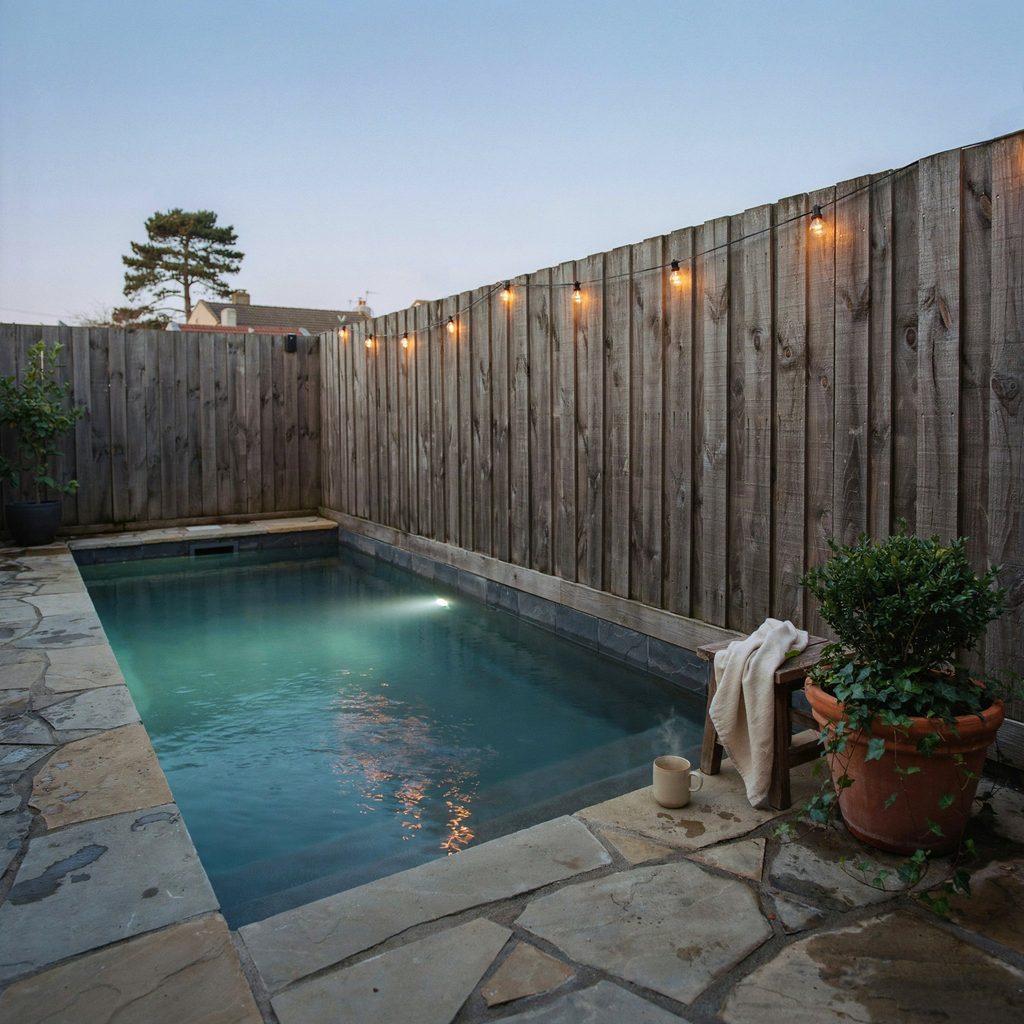
A plunge pool is a small, typically deep pool built primarily for immersion, relaxation, hydrotherapy, and cooling off rather than lap swimming. Think of it as the middle ground between a hot tub and a full-size swimming pool: big enough to submerge and move around in, small enough to fit where a conventional pool can’t.
Typical plunge pool dimensions range from roughly 6 to 14 feet long and 6 to 10 feet wide, though custom designs can stretch a bit beyond those bounds. Plunge pool depth commonly falls between 4 and 6 feet, with some models reaching 7 feet for full-body submersion. Exact dimensions vary by manufacturer, material, and whether you’re working with a custom design.
Unlike a hot tub, a plunge pool is usually unheated or lightly heated and holds significantly more water. Unlike a swim spa, it isn’t designed with a current for continuous swimming. Its purpose is simple: get in, get wet, cool down, and enjoy the water in a minimal footprint.
How a Plunge Pool Differs From a Traditional Pool
The plunge pool vs swimming pool question comes up often, and the differences are substantial. Here’s a side-by-side look at how a plunge pool stacks up against a traditional inground pool and a hot tub or spa:
| Feature | Plunge Pool | Traditional Pool | Hot Tub / Spa |
|---|---|---|---|
| Typical size | 6–14 ft × 6–10 ft | 15–40 ft × 10–20 ft | 6–8 ft × 6–8 ft |
| Depth | 4–7 ft | 3–8+ ft | 2.5–3.5 ft |
| Water volume | 2,000–6,000 gal | 15,000–30,000+ gal | 300–600 gal |
| Primary use | Soaking, cooling, aesthetics | Swimming, recreation, exercise | Hydrotherapy, relaxation |
| Heating needs | Moderate (smaller volume) | High | High (constant) |
| Maintenance effort | Low to moderate | Moderate to high | Low |
| Installation complexity | Moderate | High | Low to moderate |
| Typical cost range | Lower than full pool | Highest | Lowest |
The smaller pool footprint means less excavation, less water to treat, and a faster installation timeline. However, a plunge pool won’t replace a full pool if your household wants to swim laps or host large pool parties.
Types of Plunge Pools
Choosing the right construction method shapes your budget, timeline, and long-term upkeep.
Inground Plunge Pool
An inground plunge pool is set into the ground and finished with decking or coping at grade level. It offers the most polished, integrated look and pairs beautifully with landscape design. Inground installation requires excavation, which adds cost but creates a seamless connection to your outdoor living space.
Above-Ground Plunge Pool
An above-ground plunge pool sits partially or fully above grade, often enclosed in a decorative surround. It’s a practical option for properties with rocky soil, high water tables, or tight access where excavation is difficult. Installation is generally faster and less expensive.
Fiberglass Plunge Pool
A fiberglass plunge pool arrives as a pre-molded shell, craned or lowered into an excavated hole. Installation can be completed in as little as a few days once the site is ready. The gel-coat surface resists algae and requires fewer chemicals. The main limitation is shape and size selection, since you’re choosing from a manufacturer’s catalog.
Concrete (Gunite/Shotcrete) Plunge Pool
A concrete plunge pool is built on-site by spraying gunite or shotcrete over rebar. It offers unlimited customization in shape, depth, and finishes. The trade-off is a longer build time (often 8–12 weeks) and a higher price point. Concrete is ideal when you want unique features like built-in benches, integrated spillover spas, or irregular shapes.
Vinyl Liner Plunge Pool
A vinyl liner plunge pool uses a steel or polymer wall structure with a replaceable vinyl membrane. It’s typically the most budget-friendly inground option. Liners last roughly 10–15 years before needing replacement, and design flexibility is more limited than concrete.
How Much Does a Plunge Pool Cost in the US?
Plunge pool cost varies widely depending on material, site conditions, region, and the features you add. Rather than quoting a single number, here are realistic ranges to help you plan:
- Pool shell and basic installation: $15,000–$50,000+ depending on material (fiberglass tends toward the lower end; custom concrete toward the higher end).
- Site preparation and excavation: $2,000–$10,000, influenced by soil type, rock, grading, and access for equipment.
- Decking, coping, and surrounding hardscape: $3,000–$15,000+.
- Heating system (heat pump, gas heater, or electric): $2,000–$6,000 installed.
- Filtration, plumbing, and electrical: Often included in base quotes but confirm with your pool contractor.
- Permits and inspections: Typically $200–$1,000+, varying by municipality.
- Landscaping, fencing, and safety features: $1,000–$10,000+ depending on pool safety requirements in your area.
- Ongoing maintenance: $50–$150 per month for chemicals, electricity, and occasional service.
Overall pool installation cost for a plunge pool is generally 40–60% less than a comparable full-size inground pool, but the final number depends on your location, soil, access, and desired finishes. Always get at least three written estimates.
Is a Plunge Pool Right for Your Space?
Before you fall in love with a design, walk through this practical checklist:
- Available space and pool footprint: Measure your usable yard. A plunge pool for small yards might need as little as a 10-by-12-foot area, but you’ll also need clearance for decking, equipment, and required setbacks.
- Access for equipment: Can a small excavator or a crane delivering a fiberglass shell reach the backyard? Tight urban lots and fenced townhome rows can complicate plunge pool installation.
- Zoning, setbacks, HOA rules, and permits: Check with your local building department about pool permits and zoning. Many municipalities require specific setbacks from property lines, fencing or barriers around the pool, and electrical permits. HOAs may have additional design restrictions.
- Sun exposure, drainage, and grading: Ideally, the site gets several hours of direct sun. Avoid low spots where water pools, and confirm the grade allows proper drainage away from the pool and your home’s foundation.
- Utility lines: Call 811 before any digging to locate underground gas, water, sewer, and electrical lines.
- Intended use: Are you after a cold plunge pool for post-workout recovery, a warm soak for relaxation, a visual water feature, or a place for kids to splash? Your answer shapes the ideal size, depth, and heating setup.
- Household and safety considerations: If young children or pets are in the picture, plan for a locking fence, pool cover, or alarm per local pool safety requirements.
- Long-term commitment: Even a small pool needs regular attention. Be honest about the time you’ll dedicate to plunge pool maintenance.
Pros and Cons of a Plunge Pool
Plunge pool pros:
- Significantly smaller footprint fits compact urban backyards, townhome lots, and narrow side yards
- Lower water volume means reduced chemical use and lower utility bills—an energy-efficient pool option
- Faster heating than a full-size pool, especially with a heat pump
- Easier and less expensive routine maintenance
- Wide design flexibility, from sleek modern rectangles to natural freeform shapes
- Can serve as a swim spa alternative for those who want water immersion without a current system
Plunge pool cons:
- Not suitable for lap swimming or large-group recreation
- Heating costs can add up in cooler climates if you want warm water year-round
- Some municipalities apply the same permit and fencing rules as full-size pools
- Resale value impact varies by market; a plunge pool may not appeal to buyers expecting a traditional pool
- Limited exercise options compared to a full pool or swim spa
Plunge Pool Design Ideas for Small Backyards
Maximizing a small space is where a backyard plunge pool really shines. Consider these ideas:
- Built-in benches and ledges: A concrete plunge pool can incorporate a wraparound bench at 18–24 inches deep for lounging, with a deeper section for full submersion.
- Spillover spa combo: Add a small heated spa section that spills over into the cooler plunge area for a two-temperature experience.
- Water features: A sheer-descent waterfall or scupper spouts add sound and visual interest without taking up floor space.
- Glass or acrylic walls: On a tight urban lot, a transparent panel on one side opens up the view and makes the space feel larger.
- Natural stone coping and pavers: Bluestone, travertine, or flagstone coping ties the pool into the surrounding landscape design.
- Compact decking: A 3-to-4-foot deck perimeter is often enough for loungers and safe entry.
- Privacy landscaping: Tall ornamental grasses, bamboo (clumping varieties), or a living wall screen neighbors without a bulky fence.
- LED lighting: Underwater color-changing LEDs and low-voltage path lights extend evening use.
- Outdoor living integration: Position the plunge pool adjacent to a small patio, outdoor kitchen, or covered pergola so the water becomes part of a unified outdoor living space.
Maintenance and Operating Considerations
A plunge pool is lower-maintenance than a full-size pool, but it is not maintenance-free.
- Routine cleaning: Skim debris, brush walls, and vacuum the floor weekly. Smaller surface area means this takes 10–20 minutes.
- Water chemistry: Test and balance pH, alkalinity, and sanitizer levels at least twice a week. Less water volume means chemistry can shift faster.
- Filtration: Run the pump and filter according to the manufacturer’s schedule, typically 6–8 hours daily. Clean or backwash the filter monthly.
- Heating: Plunge pool heating options include electric heat pumps (most energy-efficient), gas heaters (faster warm-up), or solar covers to retain heat. In mild climates like the Southeast or Southern California, many owners skip a heater and use the pool seasonally.
- Winterization: In regions with hard freezes (Midwest, Northeast, Mountain states), you’ll need to winterize the pool—lowering the water level, blowing out plumbing lines, and covering the pool.
- Energy use: Because of the smaller water volume, a plunge pool is inherently an energy-efficient pool compared to a 20,000-gallon traditional pool, but running a heater continuously in cold weather will increase utility costs.
How to Choose a Pool Contractor
A quality installation protects your investment. Use this checklist when hiring a pool contractor:
- Licensing and insurance: Verify a current state contractor’s license and ask for proof of general liability and workers’ compensation insurance.
- Local experience: Choose a builder familiar with your area’s soil conditions, climate, and permit process.
- References and portfolio: Ask for at least three recent plunge pool references and photos of completed projects similar in scope to yours.
- Written proposal: Get a detailed, itemized quote covering excavation, materials, equipment, decking, permits, timeline, and payment schedule.
- Warranty terms: Understand what’s covered (structural shell, equipment, workmanship) and for how long.
- Permit handling: Confirm whether the contractor will pull permits and schedule inspections, or whether that falls to you.
- Multiple bids: Collect at least three estimates to compare scope, materials, and pricing before signing.
Frequently Asked Questions
What is the average size of a plunge pool?
Most plunge pools range from about 6 to 14 feet long and 6 to 10 feet wide, with depths between 4 and 7 feet. Custom designs can vary.
How deep is a plunge pool?
Standard plunge pool depth is 4 to 6 feet, though some models go to 7 feet for full submersion. This is deeper than most hot tubs but comparable to the shallow-to-mid range of a traditional pool.
Can you swim in a plunge pool?
Not in the traditional sense. A plunge pool is too short for lap swimming. Some owners add a swim jet for resistance, but for true swimming, a full pool or swim spa is a better fit.
Is a plunge pool cheaper than a regular pool?
Generally, yes. Because of the smaller size, reduced excavation, and lower water volume, plunge pool cost is often 40–60% less than a full-size inground pool. However, high-end finishes and features can narrow the gap.
Does a plunge pool add value to a home?
It can enhance appeal, particularly in markets where outdoor living features are in demand. The impact varies by region, buyer expectations, and overall quality of the installation. It’s not a guaranteed dollar-for-dollar return.
Can a plunge pool be heated?
Absolutely. Heat pumps, gas heaters, and solar covers are all viable. The small water volume means heating is faster and less expensive than warming a full-size pool.
Do plunge pools need permits?
In most US jurisdictions, yes. Even a small inground or above-ground pool typically requires a building permit, electrical permit, and compliance with barrier or fencing codes. Check with your local building department before starting any project.
Are plunge pools good for small backyards?
They’re one of the best pool options for small backyards, townhome lots, and urban properties. The compact footprint leaves room for decking, landscaping, and other outdoor living features.
Conclusion
A plunge pool is a smart, space-conscious way to bring water into your backyard without the cost, maintenance, and square footage of a full-size pool. It’s an especially strong fit for homeowners with small suburban lots, townhome patios, or compact urban yards who want a place to cool off, soak, and enjoy the aesthetic of water. If your priority is lap swimming, hosting large gatherings, or a full resort-style pool, a traditional pool or swim spa will serve you better.
The best next step? Grab a tape measure and sketch your available space. Call your local building department to ask about pool permits and zoning in your area. Then reach out to two or three licensed pool contractors for written estimates. With a little planning, a plunge pool can turn even the smallest backyard into the outdoor retreat you’ve been imagining.