Picture this: it’s a Saturday in July, the kids are asking to go swimming, and you’re scrolling through backyard pool ideas on your phone, wondering whether you’ll ever actually take the plunge. You’ve imagined the weekends, the barbecues, the lazy afternoons floating with a cold drink. But the moment you start pricing things out, the daydream gets complicated fast.
The inground vs above-ground pools question is one of the biggest decisions a homeowner can make for their outdoor space. It’s not just about the sticker price. Installation timelines, ongoing pool maintenance costs, local pool permits and zoning rules, safety requirements, how the pool will look five or ten years down the road, and whether it helps or hurts your home’s resale value all factor into the equation.
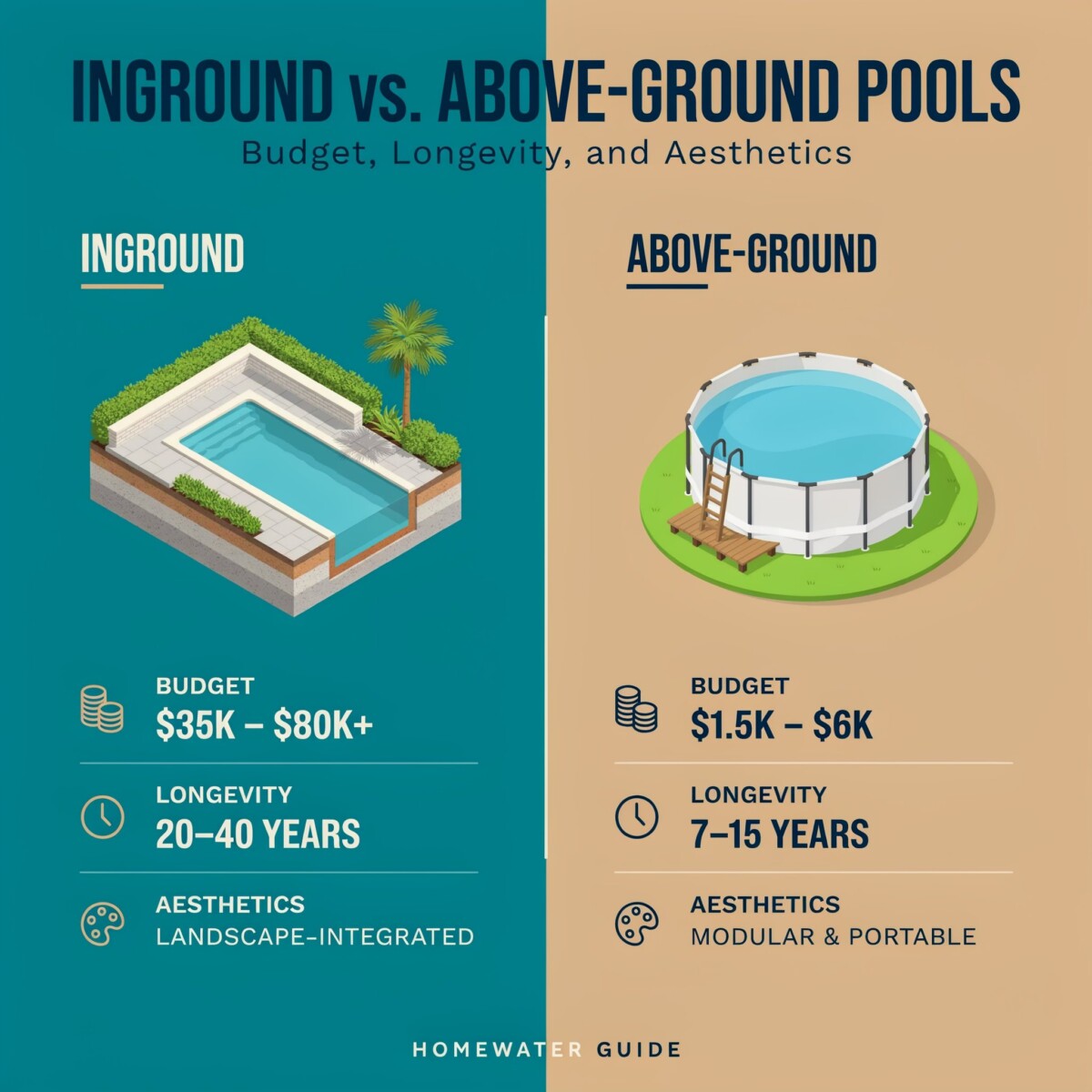
Here’s the short version: above-ground pools typically demand a smaller upfront investment and can be up and running in days or a few weeks. Inground pools offer far more design flexibility, a permanent built-in look, and a longer potential service life—but they come with a bigger budget, a longer installation timeline, and more complex upkeep. Neither option is universally “better.” The right choice depends on how long you plan to stay in your home, how much yard you have, what your local building department requires, and what you honestly want to spend over the next decade.
Let’s break it all down.
Inground vs. Above-Ground Pools at a Glance
Before diving into the details, here’s a side-by-side snapshot of the above-ground pool vs inground pool comparison.
| Factor | Inground Pool | Above-Ground Pool |
|---|---|---|
| Typical upfront cost | Broad U.S. ranges vary widely by material, size, region, and site conditions; generally significantly higher than above-ground options | Lower entry point; cost rises with frame quality, decking, and site prep |
| Installation time | Several weeks to a few months, depending on material and site complexity | A few days to a couple of weeks |
| Lifespan | Decades for the shell; components (liners, plaster, equipment) need periodic replacement | Varies by frame material, liner quality, and upkeep; generally shorter than inground |
| Maintenance needs | Higher overall complexity due to larger water volume and more equipment | Often simpler, but still requires consistent water chemistry and care |
| Design flexibility | Extensive: custom shapes, water features, tanning ledges, integrated spas | More limited, though decks and landscaping can elevate the look |
| Yard impact | Permanent excavation and landscaping changes | Less permanent; many models can be disassembled or relocated |
| Home resale considerations | Can appeal to buyers in warm-climate markets; effect varies | Usually minimal impact on appraisal value |
| Best for | Long-term homeowners wanting a custom, permanent backyard swimming pool | Budget-conscious buyers or those wanting flexibility |
Actual pool installation cost figures shift based on your region, pool size, soil conditions, permit fees, material choices, labor rates, decking, fencing, equipment packages, and any optional features you add. Always get multiple pool contractor estimates before committing.
Upfront Budget: Which Pool Costs Less?
Above-Ground Pool Cost
Above-ground pools are the more affordable backyard pool option by a wide margin. A basic round or oval model with a steel frame, a standard vinyl liner pool surface, a filtration system, and a ladder represents the entry point. From there, costs climb as you upgrade to resin or hybrid frames, add a larger or more efficient pump, include a safety cover, build a surrounding deck, or invest in above-ground pool landscaping to tie the structure into your yard.
Professional installation is recommended even for above-ground models, because proper leveling and ground preparation are critical. That said, the overall pool installation cost remains a fraction of what an inground project requires.
Inground Pool Cost
An inground pool involves excavation, grading, engineering, permits, electrical work, plumbing, drainage planning, fencing, decking, and often significant landscaping restoration. The three primary inground pool types each carry different price profiles:
- Vinyl liner pools often have the lowest initial cost among inground options, though the vinyl liner pool surface will need replacement every several years.
- Fiberglass pools arrive as a pre-manufactured shell, which can shorten the inground pool installation timeline. A fiberglass pool vs above-ground pool comparison still shows a substantial cost gap, but fiberglass can be more budget-friendly than concrete.
- Concrete (gunite) pools offer the greatest customization—any shape, depth, or finish—but the concrete pool cost is typically the highest, and the build takes the longest.
Do Not Forget the Hidden Costs
Whether you choose inground or above-ground, the pool’s purchase price is only part of the story. Budget for:
- Permit and inspection fees from your local building department
- Land grading, drainage corrections, and soil testing
- Electrical upgrades to power pumps, heaters, and lighting
- Fencing and pool safety barriers required by code
- Decking, patios, walkways, or pool deck ideas you want to incorporate
- Landscaping, retaining walls, or regrading after excavation
- Ongoing water, chemicals, filters, pumps, and cleaning tools
- Winter covers and pool winterization services in colder U.S. states
- Homeowner’s insurance adjustments and possible increases in utility bills
These line items can add thousands of dollars to either project, so build them into your pool financing options and overall budget from day one.
Longevity: Which Pool Lasts Longer?
Inground Pool Lifespan
A well-built inground pool shell—whether concrete, fiberglass, or vinyl-lined—can last for decades. However, “the pool lasts 30 years” doesn’t mean every component does. Plaster may need resurfacing, tile and coping can crack, vinyl liners typically need replacement on a cyclical basis, and pumps, heaters, and filters will eventually wear out. The inground pool lifespan is really a series of overlapping maintenance and replacement cycles.
Above-Ground Pool Lifespan
Above-ground pools can also deliver many years of service, especially higher-quality resin or steel-frame models. That said, the above-ground pool lifespan is more vulnerable to the elements. Liners can puncture, frames can corrode, and ground movement or improper winter care can shorten the life of the structure. In freeze-thaw regions, neglecting pool winterization is one of the fastest ways to damage an above-ground pool.
What Actually Determines How Long Your Pool Lasts?
- Quality of the original installation and ground preparation
- Pool material and build quality
- Climate, especially freeze-thaw cycles versus intense sun exposure
- Consistent water chemistry and chlorine pool maintenance or saltwater pool system balance
- Regular cleaning, filter care, and equipment maintenance
- Proper winterization in northern states
- Use of fitted safety covers during the off-season
- Exposure to tree debris, storms, and UV degradation
A practical example: a homeowner in Minnesota or New York will prioritize freeze-resistant materials and thorough winterization routines, while a homeowner in Florida, Arizona, or Southern California will focus more on UV protection, year-round circulation, and managing algae in warm water.
Aesthetics and Backyard Design
For many homeowners, the inground vs above-ground pools debate ultimately comes down to looks. An inground pool can be designed as a seamless extension of your patio, outdoor kitchen, garden, or entertainment area. Inground pool design options include freeform or geometric shapes, tanning ledges, waterfalls, integrated spas, custom tile work, LED lighting, and natural stone coping. The result can feel like a resort-level backyard swimming pool.
But an above-ground pool doesn’t have to look like a temporary afterthought. Modern frames, coordinated liners, and thoughtful above-ground pool landscaping can transform the appearance dramatically.
How to Make an Above-Ground Pool Look More Built-In
- Build a partial or full wraparound deck at pool-wall height
- Add pavers, crushed gravel, or a level patio area around the base
- Use privacy panels, hedges, or ornamental grasses to frame the pool
- Install outdoor lighting along the deck and pool perimeter
- Choose a coordinated liner pattern and matching patio furniture
- Keep pumps, hoses, and equipment visually concealed in a small enclosure while maintaining safe, accessible clearance for service
These upgrades won’t fully replicate a gunite infinity edge, but they can make an affordable backyard pool feel intentional and attractive.
Installation and Yard Requirements
Inground pool installation means heavy equipment, excavation, and the possibility of surprises underground: rocky soil, a high water table, buried utility lines, septic systems, easements, or a sloped lot that requires retaining walls. The pool installation timeline for inground projects can stretch from several weeks to a few months depending on material (fiberglass shells set faster than poured concrete), weather, permit approvals, and site conditions.
Above-ground pools are simpler, but “simpler” does not mean “drop it on the grass.” The site must be level, stable, and free of roots, rocks, and debris. Improper leveling is the leading cause of liner stress and frame failure.
Before you commit to either option, verify:
- Local building permits and inspection schedules
- Setback distances from property lines and structures
- Property easements and utility-line locations (call 811 before digging)
- HOA restrictions or architectural review requirements
- Pool fencing requirements and gate specifications per local code
- Electrical codes for pumps, heaters, and lighting
- Drainage and stormwater regulations
- Any zoning rules that distinguish a permanent vs temporary pool structure
Contact your local building department and at least two or three qualified installers before signing a contract.
Maintenance and Operating Costs
Both pool types require water testing, sanitizing (whether through chlorine pool maintenance or a saltwater pool system), circulation, filtration, debris removal, and seasonal opening and closing in colder climates. Swimming pool maintenance is non-negotiable for safe, clear water.
Inground pools generally involve a larger water volume, more surface area to brush and vacuum, and a more complex equipment pad, which can push pool ownership costs higher. Above-ground pools are often simpler and less expensive to maintain day to day, but they still demand consistent attention.
Budget categories to plan for:
- Chemicals, test strips, and water-balancing products
- Electricity for pumps, heaters, and any automated controls
- Filter cleaning, media replacement, or cartridge swaps
- Vacuuming manually or investing in a robotic cleaner
- Liner patching or full replacement
- Professional opening, closing, and pool winterization
- Leak detection and repairs
- Periodic equipment servicing (pump seals, heater inspections, salt cell cleaning)
Exact annual figures can range widely based on pool size, climate, usage, and whether you handle tasks yourself or hire a service. Factor these ongoing costs into your long-term pool ownership costs before you buy. For a season-by-season breakdown, check out our pool maintenance checklist
Safety, Kids, and Pets
Pool safety is not optional, regardless of pool type. The U.S. Consumer Product Safety Commission (CPSC) provides guidelines on barriers, supervision, and drowning prevention that apply to every residential pool.
Above-ground pools have naturally elevated walls, but ladders must be secured, locked, or removed when the pool is not in use. Inground pools typically require compliant fencing with self-closing, self-latching gates per local code.
A practical pool safety checklist:
- Install code-compliant barriers, fencing, and self-latching gates
- Use a properly fitted safety cover when the pool is not in use
- Keep a shepherd’s hook, life ring, and first-aid kit poolside
- Enroll children in swim lessons and teach water safety early
- Never treat flotation devices as a substitute for adult supervision
- Store pool chemicals in a locked, ventilated area away from children and pets
- Ensure drains have anti-entrapment covers compliant with the Virginia Graeme Baker Pool and Spa Safety Act
Property Value and Resale Considerations
Does a pool increase home value? The honest answer is: it depends. In warm-climate markets where pools are common and usable most of the year, an attractive, well-maintained inground pool can boost buyer appeal. In cooler regions or family-oriented neighborhoods where buyers worry about maintenance and liability, a pool can be neutral or even a slight deterrent. Pool ROI rarely equals the full installation cost.
Above-ground pools generally have minimal impact on appraised value because they are considered less permanent and are often removable. That said, a clean, well-landscaped above-ground pool with a nice deck still adds enjoyment while you live in the home.
The primary return on either pool is lifestyle value—years of family fun, exercise, and outdoor entertaining—rather than a guaranteed financial gain. For broader context on how outdoor projects affect resale, explore our guide to backyard landscaping ideas
Who Should Choose an Inground Pool?
An inground pool tends to be the right fit if you:
- Plan to stay in your home for many years
- Want a fully custom backyard design with unique shapes or features
- Expect frequent, heavy use from family and guests
- Have sufficient yard space and a larger project budget
- Value a permanent, integrated look that blends with patios and gardens
- Want add-ons like spas, waterfalls, tanning ledges, or natural stone finishes
For a deeper look at what the build process involves, see our inground pool construction timeline
Who Should Choose an Above-Ground Pool?
An above-ground pool is often the smarter pick if you:
- Have a limited upfront budget but still want a swimming option
- Want a faster setup so the family can swim this summer
- Are unsure about long-term pool ownership and want flexibility
- Have a smaller yard or less permanent outdoor plans
- Rent or live where permanent excavation is impractical (where permitted)
- Prefer lower installation complexity and the ability to relocate or remove the pool later
Final Verdict: Inground or Above-Ground?
The inground vs above-ground pools question doesn’t have a single winner. An above-ground pool is often the smartest choice for affordability, flexibility, and speed of installation. An inground pool may be worth the larger investment if you want a durable, customized backyard centerpiece and plan to enjoy it for a decade or more.
Before you decide, get at least three local pool contractor estimates, confirm every permit and zoning requirement with your municipality, walk your yard with a critical eye for slope, drainage, and access, and calculate both the upfront price and the long-term pool ownership costs. That homework will save you money, surprises, and regret.
Frequently Asked Questions
1. Is an inground pool worth more than an above-ground pool?
In most U.S. real estate markets, an inground pool carries more perceived value and may appeal to a broader pool of buyers, particularly in warm climates. An above-ground pool rarely adds significant appraised value because it is often classified as personal property rather than a permanent structure. That said, market conditions vary, and neither pool type guarantees a dollar-for-dollar return.
2. How long do above-ground pools usually last?
A well-maintained above-ground pool with a quality resin or steel frame can last roughly 10 to 20 years, though liners typically need replacement sooner. Lifespan depends heavily on frame material, climate, water chemistry, winterization practices, and whether the pool sits on properly prepared ground.
3. What type of inground pool lasts the longest?
Concrete (gunite) pools are generally considered the most durable inground option, with shells that can last 50 years or more when properly maintained, though the interior plaster finish will need periodic resurfacing. Fiberglass shells also have a long service life and resist algae better than porous surfaces. Vinyl liner pools are durable as well, but the liner itself is a recurring replacement item.
4. Can an above-ground pool look like an inground pool?
Not identically, but close. A wraparound deck built to the pool’s top rail, coordinated landscaping, privacy plantings, exterior cladding, and strategic lighting can dramatically reduce the “above-ground” look. The result won’t fool a pool professional up close, but it can create a polished, intentional backyard focal point.
5. Does an inground pool increase home value?
It can improve buyer appeal, especially in regions where pools are expected, but it rarely increases appraised value by the full cost of installation. Some buyers view a pool as a maintenance burden or safety concern. The real return is usually measured in years of personal enjoyment rather than resale profit.