Installing an inground pool is one of the most exciting—and expensive—home improvement projects a US homeowner can undertake. It transforms your backyard into a private oasis, boosts your home’s lifestyle appeal, and creates a centerpiece for family memories. However, before you start picking out patio furniture or planning your first poolside barbecue, you have to make a foundational decision about the pool shell itself.
When comparing concrete vs fiberglass vs vinyl liner pools, there is no single “best” option for everyone. The right choice depends entirely on your budget, your yard’s layout, your local climate, your design goals, and how much time you want to spend on weekend maintenance. Each material has distinct advantages and trade-offs regarding upfront costs, installation timelines, long-term durability, and ongoing upkeep.
In this comprehensive guide, we will break down the three primary inground pool types to help you make an informed, confident decision for your home.
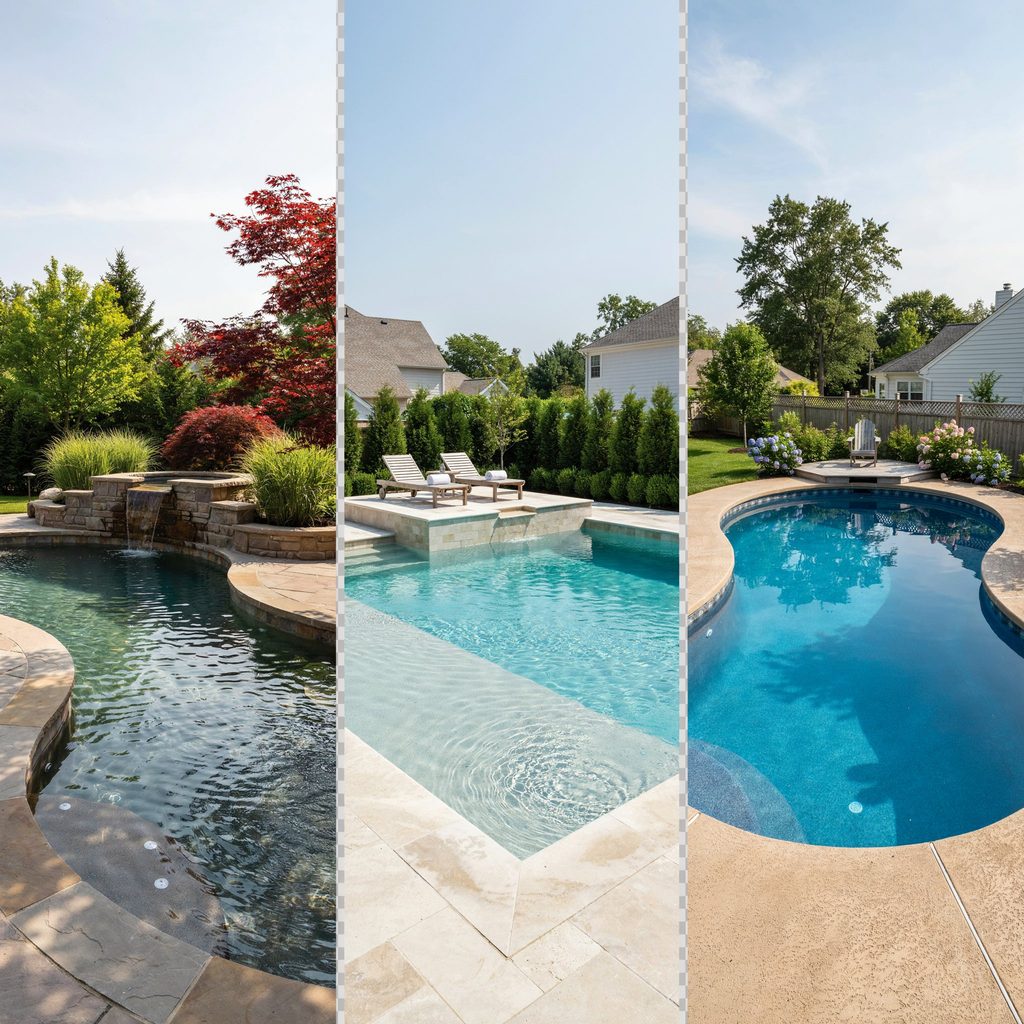
Quick Answer: Which Pool Type Should You Choose?
If you are short on time and need a decision-first summary, here is a quick guide based on common homeowner priorities:
- Choose Fiberglass for fast installation, low maintenance, smooth surfaces, and strong long-term value. It is the ultimate “install it and enjoy it” option for busy families.
- Choose Concrete/Gunite for fully custom shapes, luxury features, infinity edges, beach entries, and maximum design flexibility. It is the premier choice for high-end, resort-style backyards.
- Choose Vinyl Liner for the lowest upfront cost and a softer, customizable-looking pool on a tighter budget. It is a great entry point if you want a large swimming area without breaking the bank initially.
In the ongoing debate of concrete vs fiberglass vs vinyl liner pools, fiberglass wins for low-maintenance convenience, concrete wins for bespoke luxury, and vinyl wins for initial affordability.
Concrete vs. Fiberglass vs. Vinyl Liner Pools: At-a-Glance Comparison
To help you visualize the trade-offs, here is a side-by-side breakdown of the three main inground pool types.
Note: The cost ranges below are national US estimates for a standard-sized pool (e.g., 12×24 to 16×32 feet) including basic excavation, equipment, and standard decking. Final prices vary heavily by region, site access, soil conditions, and premium upgrades.
| Feature | Vinyl Liner Pool | Fiberglass Pool | Concrete (Gunite) Pool |
|---|---|---|---|
| Typical Installed Cost | $35,000 – $65,000+ | $45,000 – $100,000+ | $50,000 – $120,000+ |
| Installation Time | 4 – 8 Weeks | 1 – 3 Weeks | 2 – 6 Months |
| Surface Feel | Smooth, soft | Extremely smooth, hard | Rough, abrasive (unless upgraded) |
| Design Flexibility | High (custom panel shapes) | Moderate (limited to factory molds) | Unlimited (fully custom) |
| Expected Lifespan | Walls: 25+ yrs / Liner: 5-15 yrs | 25 – 30+ Years | Structure: 50+ yrs / Plaster: 10-15 yrs |
| Maintenance Level | Moderate | Low | High |
| Major Ongoing Expense | Liner replacements | Minimal (chemicals/electricity) | Acid washing, resurfacing, high chemicals |
| Best For | Budget-conscious buyers wanting large sizes | Busy families wanting a low-maintenance pool | Luxury buyers wanting custom, resort-style designs |
What Is a Concrete Pool?
A concrete pool—often referred to interchangeably as a concrete gunite pool or shotcrete pool—is built entirely from scratch in your backyard. The process begins with excavating the hole and installing a grid of steel rebar to create the skeleton of the pool.
Next, a crew sprays a mixture of concrete and sand (shotcrete) or a dry concrete mix that is hydrated at the nozzle (gunite) over the rebar at high velocity. Once the shell cures, it is plastered to create a watertight seal. Modern concrete pools often upgrade from standard white plaster to more durable and attractive finishes like exposed pebble, quartz, or glass bead aggregates, and can incorporate extensive tile work along the waterline.
Because the shell is built on-site, concrete is the undisputed king of custom pool design. If you can dream it, a concrete builder can form it. This is why concrete is the standard for luxury estates, commercial resorts, and high-end architectural projects.
What Is a Fiberglass Pool?
Unlike concrete, a fiberglass pool is not built in your yard; it is manufactured in a climate-controlled factory. The pool is created as a single, seamless shell using layers of fiberglass mats and resins, finished with a protective, non-porous gel-coat surface. Once cured, the massive shell is loaded onto a flatbed truck, delivered to your home, and lowered into an excavated hole by a crane.
The fiberglass pool pros and cons are heavily tied to this manufacturing process. On the pro side, the factory finish is incredibly smooth, highly resistant to algae, and requires very little chemical balancing. On the con side, you are limited to the shapes and sizes that the manufacturer has molds for. While modern fiberglass pools feature beautiful tanning ledges, built-in benches, and sleek geometric or freeform shapes, you cannot alter the fundamental dimensions of the shell once it is built.
Because it arrives as a finished product, fiberglass is incredibly popular with busy homeowners who want a beautiful backyard without the chaotic, months-long construction process.
What Is a Vinyl Liner Pool?
A vinyl liner pool consists of a structural framework—usually made of galvanized steel, aluminum, or polymer panels—assembled over a meticulously leveled and prepared sand or vermiculite floor. Plumbing is installed, and then a custom-cut sheet of heavy-duty vinyl is dropped into the pool, stretched tight, and locked into a track at the top edge (the coping).
The vinyl pool liner lifespan is the defining characteristic of this pool type. The structural walls can easily last for decades, but the vinyl liner itself is a wearable component. It feels smooth and soft to the touch, and manufacturers offer hundreds of patterns and colors, allowing you to mimic the look of natural stone, tile, or deep blue water.
Vinyl remains a highly affordable entry point into pool ownership. It allows homeowners to achieve a very large swimming area for a fraction of the cost of a similarly sized concrete pool, provided they are prepared for the recurring cost of replacing the liner down the road.
Upfront Installation Costs
When evaluating your pool budget, it is crucial to look beyond the base price of the pool shell. The total installed cost includes excavation, soil removal, plumbing, electrical work, the pool equipment (pump, filter, heater), permits, and basic hardscaping or decking.
- Vinyl Liner Pools: Generally the cheapest inground pool to install initially. A standard 16×32 vinyl pool typically ranges from $35,000 to $65,000+. However, prices can climb quickly if you add premium features like concrete decking instead of basic pavers, or automated safety covers.
- Fiberglass Pools: The fiberglass pool cost usually sits in the mid-to-upper range, typically between $45,000 and $100,000+. The shell itself is expensive to manufacture and ship (requiring wide-load permits and cranes), but the drastically reduced labor and installation time helps offset the material cost.
- Concrete Pools: Usually the most expensive option, starting around $50,000 and easily exceeding $120,000+ for luxury designs. The high cost is driven by intense labor, multiple specialized trades (steel tiers, gunite crews, plasterers, tile setters), and the extended time the crew spends on your property.
Factors that change price for all types: Poor soil conditions (like heavy rock requiring blasting), tight backyard access requiring manual digging, high-end automation, water features, and local labor rates.
Installation Timeline
If you want to be swimming by mid-summer, pool installation time is a massive factor.
- Fiberglass (1–3 Weeks): Once the heavy machinery arrives and the hole is dug, a fiberglass pool can be craned in, leveled, plumbed, and backfilled in a matter of days. The surrounding deck work may take another week or two, but the pool itself is often swim-ready in under three weeks.
- Vinyl Liner (4–8 Weeks): Building the wall panels, pouring the collar beam, preparing the intricate floor contour, and hanging the liner takes precision. Add in the time required to pour concrete decking, and you are generally looking at a 1 to 2-month project.
- Concrete/Gunite (2–6 Months): Concrete pools take the longest by a wide margin. After the gunite is sprayed, the shell must “cure” for up to 28 days to reach maximum structural strength. During this time, it must be kept wet and monitored. Following the cure, the tedious process of tile setting, coping, and plastering begins, subject to weather delays and the schedules of multiple subcontractors.
Design Flexibility and Customization
If you have a highly specific vision, the shell material will dictate what is possible.
- Concrete: The ultimate blank canvas. You can build a concrete gunite pool to fit any bizarre lot line, incorporate vanishing edges, build negative-edge spas, add shallow sun shelves, or create a natural lagoon look with boulders and grottos.
- Fiberglass: Limited by factory molds. However, today’s molds are far from the boring “bathtub” shapes of the 1990s. You can find gorgeous Roman ends, kidney shapes, and modern rectangular designs with integrated tanning ledges and deep swim-outs. You just cannot change the dimensions to the exact inch.
- Vinyl: Surprisingly flexible. Because the walls are assembled panel-by-panel, you can create custom freeform shapes, true L-shapes, and lazy rivers. However, highly complex shapes make cutting and fitting the vinyl liner much more difficult and expensive.
Durability and Lifespan
When discussing pool lifespan, you must separate the structural shell from the interior finish.
- Concrete: Structurally, a steel-reinforced concrete shell can last 50 to 100 years, making it arguably the most durable pool type in terms of sheer mass. However, the interior plaster finish is highly susceptible to chemical erosion and staining, requiring a full resurfacing every 10 to 15 years.
- Fiberglass: The structural shell and the gel-coat finish are one and the same. A high-quality fiberglass pool is expected to last 25 to 30+ years without needing major structural or surface overhauls. The gel-coat is flexible, meaning it handles minor ground shifting better than rigid concrete.
- Vinyl: The steel or polymer walls will easily last 30+ years. However, the vinyl pool liner lifespan is strictly limited. Depending on sun exposure, water chemistry, and whether you have pets or use sharp pool toys, the liner will need to be replaced every 5 to 15 years.
Maintenance Requirements
Your tolerance for weekend chores will heavily influence your choice. Concrete pool maintenance is notoriously demanding, while fiberglass is famously easy.
| Maintenance Factor | Concrete | Fiberglass | Vinyl Liner |
|---|---|---|---|
| Algae Resistance | Poor (porous surface harbors algae) | Excellent (non-porous gel-coat) | Good (smooth, but seams can trap debris) |
| Brushing | Weekly (mandatory to prevent algae) | Rarely needed | Occasional |
| Chemical Demand | High (plaster alters pH, requires more acid/chlorine) | Low (inert surface doesn’t affect water chemistry) | Moderate |
| Surface Care | Must monitor for rough spots and staining | Easy wipe-down; avoid abrasive cleaners | Must avoid sharp objects and monitor for fading |
Fiberglass is widely considered the best low-maintenance pool on the market. Because the gel-coat is completely non-porous, algae has nowhere to take root, drastically reducing your pool chemical costs and the time you spend scrubbing walls. Concrete’s porous plaster acts like a sponge for algae, requiring rigorous weekly brushing and higher chlorine levels to keep the water clear. Vinyl sits in the middle; it is smooth, but you must be vigilant about maintaining proper chemical balance, as high chlorine levels can bleach and degrade the liner pattern over time.
Long-Term Ownership Costs
A common mistake first-time buyers make is ignoring the inground pool maintenance cost and long-term repair bills. The cheapest inground pool to buy is rarely the cheapest to own over 20 years.
- Vinyl Liner Pools: You must budget for vinyl liner pool replacement. A new liner, including labor, typically costs between $3,000 and $7,500+. Over a 30-year period, you will likely pay for 2 to 3 new liners, adding $10,000 to $20,000+ to your lifetime ownership cost.
- Concrete Pools: You must budget for acid washing and eventual resurfacing. The pool resurfacing cost for a standard residential pool ranges from $6,000 to $15,000+ every 10 to 15 years. Additionally, the higher weekly chemical and electricity usage (due to longer pump run times needed for heavy filtration) adds up year over year.
- Fiberglass Pools: Fiberglass largely avoids both liner replacements and full resurfacing. While you may occasionally need to repair a surface scratch or fix a plumbing leak, the lack of mandatory major interior overhauls makes fiberglass the most financially predictable option over a multi-decade timeline.
Comfort, Appearance, and Feel
The tactile experience of your pool matters, especially if you have children who spend hours playing on the steps and shallow ends.
- Concrete: Standard white plaster can feel like coarse sandpaper. It is notorious for scraping the toes and knees of playing children. Upgrading to a polished pebble or quartz finish smooths this out significantly, but it adds thousands to the initial price tag.
- Fiberglass: The gel-coat surface is exceptionally smooth, often compared to the finish of a new car or a high-end bathtub. It is gentle on bare feet and highly slip-resistant on the steps and tanning ledges.
- Vinyl: Vinyl feels soft, smooth, and slightly yielding. It is very comfortable to the touch and completely non-abrasive.
Aesthetically, concrete offers high-end tile lines and natural stone coping. Vinyl offers vibrant, printed patterns that can mimic deep blue water or Caribbean tile. Fiberglass offers a clean, uniform, modern look, often featuring integrated colored gel-coats and beautiful acrylic or cantilevered concrete coping to frame the edge.
Saltwater Pool Compatibility
Many US homeowners are switching to saltwater chlorine generators (SWGs) for softer, less irritating water. However, saltwater pool compatibility varies by shell material.
- Fiberglass: Highly compatible. The inert gel-coat is entirely unaffected by salt. In fact, fiberglass and saltwater systems are a match made in heaven, resulting in pristine water with minimal surface wear.
- Vinyl Liner: Generally compatible, but requires vigilance. If salt levels are allowed to spike, or if undissolved salt piles sit on the pool floor, it can bleach or degrade the vinyl. Furthermore, splashing saltwater on surrounding untreated metal decking or stone coping can cause rapid corrosion.
- Concrete: Compatible, but with caveats. Saltwater can accelerate the deterioration of standard white plaster and can cause efflorescence (white, crusty salt deposits) on the coping and deck. If you want a saltwater system in a concrete pool, it is highly recommended to upgrade to a dense pebble finish and use salt-resistant coping materials like travertine or sealed concrete.
Climate and Regional Considerations
The US features wildly different climates, and your geography plays a role in pool selection:
- Freeze-Thaw Regions (Midwest, Northeast): All pools require proper winterization. However, concrete pools are susceptible to cracking if water gets into the porous shell and freezes. Fiberglass shells are flexible and handle freeze-thaw cycles well, provided the pool is kept full to equalize ground pressure.
- High Water-Table Areas (Coastal regions, Florida): Fiberglass pools act like giant boats. If the pool is drained for maintenance in an area with a high water table, the hydrostatic pressure from the surrounding ground can literally pop the lightweight shell out of the earth. Proper hydrostatic relief valves and keeping the pool full are mandatory.
- Hot, Sunny Climates (Southwest, Texas, Florida): Intense UV rays can cause darker vinyl liners to fade or become brittle over time. Concrete pools in extreme heat require constant monitoring, as the plaster can dry out and crack during the curing process if not kept continuously wet.
- Rocky or Expansive Soil (Mountain West, parts of Texas): If your yard is solid bedrock, excavation costs will skyrocket regardless of pool type. However, expansive clay soils that swell when wet and shrink when dry can exert immense pressure on pool walls. Steel-reinforced concrete and engineered polymer vinyl walls often handle this shifting better than rigid fiberglass.
Resale Value and Buyer Appeal
How does a pool affect your pool resale value? Real estate experts generally agree that a pool does not automatically add a dollar-for-dollar return on investment, but it heavily influences buyer appeal and the speed of the sale, particularly in warm-weather states like California, Arizona, Florida, and Texas.
Buyers are often wary of older pools because they view them as impending financial liabilities. An aging vinyl liner with visible wrinkles or fading signals to a buyer that they will immediately have to spend $5,000 upon moving in. Similarly, a concrete pool with rough, stained plaster or missing waterline tile screams “expensive resurfacing project.”
A well-maintained fiberglass pool, however, is often viewed favorably by prospective buyers because it is perceived as a modern, hassle-free asset. Ultimately, the condition, safety features (like fences and covers), and surrounding landscaping matter far more to an appraiser than the shell material itself.
Best Pool Type by Homeowner Profile
Still on the fence? Find your profile below to see which pool type aligns with your lifestyle:
- Best for lowest upfront budget: Vinyl Liner (gets you the most water volume for the lowest initial cash outlay).
- Best for low maintenance: Fiberglass (saves you hours of brushing and hundreds in chemicals annually).
- Best for custom luxury design: Concrete/Gunite (the only choice for infinity edges, beach entries, and exact architectural integration).
- Best for fastest installation: Fiberglass (you can be swimming weeks after signing the contract).
- Best for families with kids: Fiberglass or Vinyl (both offer smooth, non-scraping surfaces for active play).
- Best for large custom backyards: Concrete (allows for massive, sprawling resort-style footprints).
- Best for long-term low-hassle ownership: Fiberglass (avoids the mandatory 10-year resurfacing or liner replacement trap).
- Best for homeowners who want frequent design changes: Vinyl Liner (swapping to a new liner pattern every 10 years completely changes the look of the pool).
Common Mistakes to Avoid
Before signing a contract with a builder, ensure you aren’t falling into these common traps:
- Comparing only upfront price: A $40,000 vinyl pool is cheaper today than a $65,000 fiberglass pool, but factor in two $5,000 liner replacements over the next 20 years.
- Ignoring site access costs: If a crane cannot reach your backyard to drop in a fiberglass shell, or if an excavator cannot fit through your side gate, manual labor costs will blow up your budget.
- Underestimating the “extras”: The pool shell is only half the battle. Fencing, permits, electrical upgrades, heaters, and decking can easily add 30% to 50% to the base quote.
- Hiring based on price alone: Always check local references, verify licensing and insurance, and read the warranty terms. A cheap builder who goes out of business in two years leaves you with zero warranty support.
- Choosing a surface based only on looks: You might love the dark, moody look of black plaster, but be prepared for the intense concrete pool maintenance required to keep it from showing calcium scaling.
Final Verdict
Ultimately, the debate of concrete vs fiberglass vs vinyl liner pools comes down to aligning the material with your specific priorities.
If you are a busy professional or a family with young children who values your weekends and wants a predictable, low-maintenance pool, fiberglass is generally the strongest all-around choice. If you are designing a luxury estate, have a challenging lot layout, or demand high-end architectural features like vanishing edges, concrete is worth the premium price and extended timeline. Finally, if you are working with a strict initial pool budget but still want a large, beautiful swimming area, vinyl liner remains a sensible, comfortable choice—provided you budget for future liner replacements.
Call to Action: Do not rely on internet estimates alone. Get quotes from at least three local, highly-rated pool builders. Ask for itemized estimates that clearly separate excavation, equipment, decking, permits, and long-term maintenance expectations so you can compare apples to apples.
Frequently Asked Questions (FAQ)
1. Which pool lasts longest: concrete, fiberglass, or vinyl?
Structurally, a concrete pool lasts the longest (50+ years). However, its interior plaster surface degrades and requires resurfacing every 10–15 years. A fiberglass pool shell and surface last 25–30+ years without major overhauls, while vinyl pool walls last for decades, but the liner must be replaced every 5–15 years.
2. What is the cheapest inground pool to install?
A vinyl liner pool is generally the cheapest inground pool to install upfront. Because the structural walls are made of prefabricated steel or polymer panels and the interior is a flexible sheet of vinyl, the labor and material costs are significantly lower than spraying gunite or shipping a massive fiberglass shell.
3. Which pool type has the lowest maintenance?
Fiberglass pools have the lowest maintenance requirements. The non-porous gel-coat surface prevents algae from taking root, meaning you spend less time brushing the walls and use significantly fewer chemicals to keep the water balanced compared to porous concrete plaster.
4. How often does a vinyl pool liner need replacement?
On average, a vinyl pool liner needs replacement every 7 to 10 years, though high-quality liners in well-maintained, shaded pools can last up to 15 years. Sun exposure (UV rays), harsh chemical imbalances, and physical punctures from pets or sharp objects will shorten this lifespan.
5. Is a fiberglass pool worth the extra cost compared with vinyl?
For most modern homeowners, yes. While a fiberglass pool may cost $10,000 to $20,000 more upfront than a vinyl pool, it eliminates the mandatory $4,000–$7,000 liner replacement costs that occur every decade. When combined with drastically lower weekly chemical costs and maintenance time, fiberglass often breaks even or saves money over a 20-year ownership period.