If you are dreaming of a backyard oasis, the first question on your mind is likely: how long does it take to build an inground pool?
The most honest and realistic answer for US homeowners is that you should expect the entire project to take 3 to 6 months from contract signing to your first swim. However, the actual “dirt in the ground” active construction phase usually takes between 8 and 16 weeks once permits are approved.
A common source of frustration for new pool owners is a misunderstanding of what pool companies mean when they quote a “build time.” Many builders quote the time it takes to physically construct the pool—digging the hole, laying the shell, and pouring the deck. This estimate entirely excludes the often-lengthy design phase, municipal permitting, HOA approvals, and potential weather delays.
Understanding the complete pool installation timeline is crucial for setting realistic expectations. Below, we break down the pool construction process step-by-step, compare timelines by pool material, and explain the variables that can speed up or slow down your backyard transformation.
Average Inground Pool Construction Timeline at a Glance
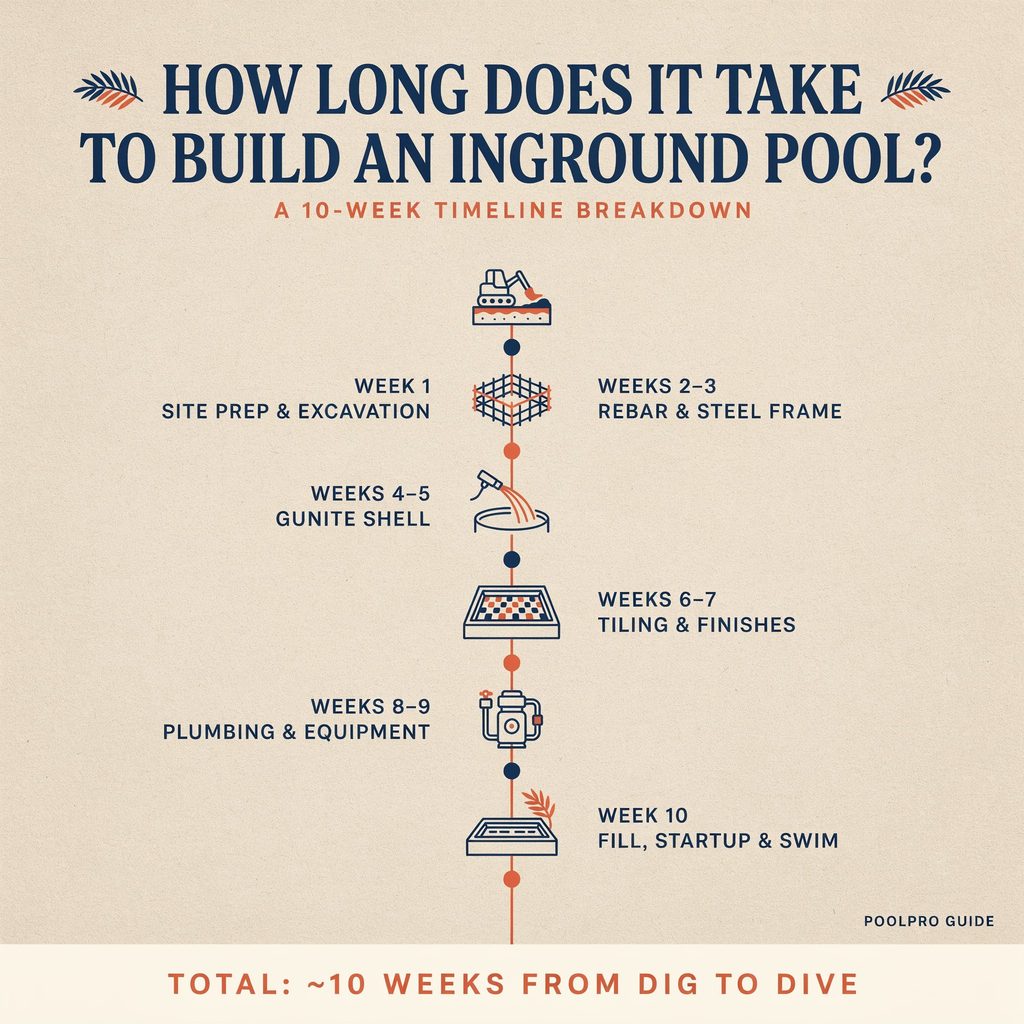
Before diving into the details, here is a high-level look at a standard inground pool construction timeline for a typical 16×32 residential pool. Keep in mind that these ranges are averages; your specific municipality, soil conditions, and builder’s workload will dictate your exact schedule.
| Construction Phase | Typical Duration | What Happens |
|---|---|---|
| Consultation & Design | 1–3 Weeks | Site evaluation, 3D renderings, budgeting, and contract signing. |
| Permits, Zoning & HOA | 2–8+ Weeks | Engineering approvals, municipal building permits, and HOA reviews. |
| Pool Excavation | 2–5 Days | Staking the layout, digging the hole, and hauling away dirt. |
| Rough-In (Plumbing/Electric) | 1–2 Weeks | Laying underground pipes, steel rebar, and electrical conduits. |
| Pool Shell Installation | 1–4 Weeks | Installing the structure (gunite, fiberglass, or vinyl panels). |
| Decking, Coping & Tile | 2–5 Weeks | Forming and pouring concrete, laying stone coping, and waterline tile. |
| Interior Finish | 3–5 Days | Plastering, pebble application, or dropping the vinyl liner. |
| Fill, Startup & Orientation | 3–7 Days | Filling the pool, balancing chemicals, and testing equipment. |
When you add up the active construction phases, you are looking at roughly 8 to 16 weeks of work in your yard. However, because the pre-construction and permitting phases can easily eat up another 1 to 3 months, the total pool installation timeline reliably sits in that 3 to 6-month window.
Step-by-Step Inground Pool Construction Timeline
To truly understand how long does it take to install an inground pool, it helps to look at the day-to-day and week-to-week realities of the pool construction process.
1. Initial Consultation and Design (1–3 Weeks)
Everything begins with a site evaluation. A designer will measure your yard, note property lines, and assess access points for heavy machinery. You will work together to finalize the size, shape, depth, and features of the pool. Once you agree on a 3D design and a budget, you will sign the contract and pay a deposit. This phase moves quickly as long as you make decisions promptly.
2. Permitting, Zoning, and HOA Approval (2–8+ Weeks)
This is where the inground pool permits timeline can vary wildly. Your builder’s engineering team must submit site plans to your local building department to ensure the pool meets setback requirements, easement rules, and safety codes (like fence and barrier requirements).
Simultaneously, if you live in a community with a Homeowners Association (HOA), you must submit architectural review applications. The pool permit approval time relies entirely on your local municipality’s backlog and your HOA’s meeting schedule. In some fast-moving suburbs, you might have permits in hand in two weeks; in strict municipalities, it can take two months or more.
3. Pool Layout and Excavation (1–2 Weeks)
Once permits are in hand, the pool excavation timeline begins. A crew will use spray paint or stakes to outline the exact shape of the pool in your yard. You will do a final “walk-through” of the layout before the excavators arrive.
Heavy machinery—like skid steers or mini-excavators—will dig the hole. If your yard has narrow side gates, dirt may have to be hauled away manually in wheelbarrows, which slows the process down. If the soil is standard dirt, excavation might take just two days. If they hit solid bedrock, it can take a week or more to break it up with a rock hammer.
4. Plumbing, Electrical, and Rough-In (1–2 Weeks)
With the hole dug, the skeleton of the pool takes shape. For concrete pools, a massive grid of steel rebar is tied together to reinforce the shell. Plumbers trench the ground to install the main drains, skimmers, return lines, and suction lines leading to the equipment pad. Electricians lay underground conduits for pool lights, pumps, and bonding wires. Inspections by the city are usually required at this stage before the shell can be installed.
5. Pool Shell Installation (1–4 Weeks)
This phase dictates the structural integrity of the pool. For a gunite or shotcrete pool, a pneumatic hose sprays a mixture of cement and sand over the rebar at high velocity. The crew then hand-carves the shelves, steps, and benches. Gunite requires a curing period (usually a week or two of being lightly misted with water) to reach maximum strength before the next phase can begin.
6. Pool Decking and Coping (2–5 Weeks)
Once the shell is cured, the aesthetic phase begins. Masons install pool decking and coping—the capstone that borders the pool edge. Waterline tile is laid, and the patio area is formed and poured or paved. If you are adding a custom spa, tanning ledge, fire features, or an outdoor kitchen, this phase will take significantly longer.
7. Interior Finish and Equipment Set (1 Week)
For concrete pools, the interior finish (standard white plaster, quartz, or premium pebble finishes) is troweled on. The heavy equipment—pumps, filters, heaters, and automation panels—is mounted at the equipment pad and plumbed in.
8. Pool Fill, Startup, and Orientation (3–7 Days)
The final step is the pool fill and startup. Depending on your local water pressure and the size of the pool, filling can take 24 to 48 hours. Once filled, a technician will fire up the equipment, check for leaks, and begin the complex process of water chemistry balancing. The builder will then walk you through your new automation system and explain how to maintain the water. Your first swim after pool construction can usually happen as soon as the water chemistry is balanced and the plaster has safely cured, often within a few days of the fill.
Timeline by Pool Type
The material you choose for your pool shell is one of the biggest factors dictating the pool construction process. Here is how the three main types of inground pools compare regarding active construction time.
Fiberglass Pool Installation Time: 6–10 Weeks
Fiberglass pool installation time is generally the fastest of the three main options. Because the pool shell is manufactured off-site in a factory, it arrives in your driveway as a single, fully molded piece. Once the hole is dug and a gravel base is prepped, a large crane lifts the shell and drops it directly into the ground in a matter of hours.
The time savings comes from the fact that there is no rebar tying, no shotcrete spraying, and no plaster curing time. Once the shell is leveled, backfilled, and the plumbing is connected, the builder moves straight to the deck and patio. A standard fiberglass project often wraps up active construction in about 6 to 10 weeks.
Vinyl Liner Pool Construction Timeline: 8–12 Weeks
The vinyl liner pool construction timeline sits comfortably in the middle. The process begins with excavating the hole and installing a framework of prefabricated steel or polymer wall panels. A base material (usually a mix of sand and Portland cement, or vermiculite) is troweled smoothly over the floor of the dig to create a soft, contoured bed.
Once the walls and floor are prepped, the custom-cut vinyl liner is dropped in and vacuumed into place to remove wrinkles. While the structural assembly is relatively quick, the surrounding patio, retaining walls, and decking still require standard construction time. Expect active construction to take 8 to 12 weeks.
Gunite Pool Construction Timeline: 10–16+ Weeks
The gunite pool construction timeline is the longest, but it also offers the most design flexibility. Because a gunite (or shotcrete) pool is built entirely from scratch in your yard, it involves more labor-intensive steps. Tying the heavy steel rebar cage takes time, and the gunite application itself requires highly skilled masons.
Furthermore, gunite needs time to cure. You cannot immediately apply heavy stone coping or waterline tile to a shell that is still releasing moisture and shrinking into its final shape. Additionally, gunite pools are highly customizable, meaning homeowners often add complex features like infinity edges, custom rock waterfalls, and integrated spas, all of which add weeks to the schedule. It is very common for a custom gunite project to take 12 to 16 weeks of active construction.
What Can Delay an Inground Pool Build?
Even the most experienced builders encounter hurdles. If your project stretches past the 6-month mark, it is likely due to one of the following backyard pool construction delays:
- Municipal Permit Backlogs: City building departments operate on their own schedules. If your town is experiencing a construction boom, plan reviewers may take weeks to look at your engineering drawings.
- HOA Approval Delays: Many HOAs only meet once a month to review architectural applications. If you miss the submission deadline by one day, your project could be stalled for 30 days.
- Weather Conditions: Rain turns excavation sites into mud pits, making it impossible for heavy machinery to operate without sinking. In northern climates, late-season builds risk freeze/thaw cycles that can damage freshly poured concrete or plumbing lines. Extreme summer heat can also cause plaster to cure too quickly, leading to cracking.
- Poor Soil Conditions: If the excavator hits solid bedrock, it must be broken apart with heavy machinery, adding days or weeks to the dig. If the soil is dense clay or the water table is high, the crew may have to install a complex dewatering system or over-dig and backfill with gravel to stabilize the floor.
- Utility and Easement Issues: Before digging, utilities must be marked (via 811). If a major sewer line or gas line runs through your proposed build site, the design may have to be moved, requiring a trip back to the permitting office.
- Material Lead Times: Standard white plaster and basic pumps are usually in stock. However, if you choose imported glass waterline tile, specialized automation systems, or custom coping stones, you may be waiting 4 to 8 weeks for those materials to ship.
- Change Orders: Deciding to add a tanning ledge or change the shape of the patio after excavation has begun will stop the crew in their tracks. Redrawing plans, ordering more materials, and re-scheduling subcontractors is a major cause of extended timelines.
How to Keep Your Pool Project on Schedule
While you cannot control the weather or the speed of your local building department, you can take proactive steps to keep your pool builder schedule on track.
1. Finalize Design Decisions Early
Do not wait until the excavator is in your yard to decide on the patio material or the color of the waterline tile. Make every aesthetic and functional decision before the contract is signed and permits are submitted.
2. Choose a Reputable Local Builder
A well-established local builder already knows the quirks of your local building department, the inspectors, and the soil conditions in your area. They will have a reliable roster of subcontractors (plumbers, electricians, masons) who show up on time.
3. Demand a Written Schedule
Ask your builder for a milestone-based construction schedule. While dates may shift slightly due to weather, having a clear, written roadmap ensures accountability and helps you know when to expect crews in your yard.
4. Prepare Your Property
Clear the backyard of obstacles. If the construction crew needs to drive a Bobcat through your side yard, remove fences, low-hanging branches, and delicate landscaping beforehand. Good access speeds up both the excavation and the hauling of debris.
5. Avoid Mid-Build Changes
Once the layout is staked and the digging begins, commit to the plan. Change orders are the enemy of a smooth timeline.
6. Order Long-Lead Items Upfront
If you want a specific brand of pool heater or custom automation, ask your builder to order it the day the contract is signed so it arrives exactly when it is needed during the equipment set phase.
When Should You Start Planning an Inground Pool?
Knowing when to start building a pool is just as important as knowing how long it takes. If your goal is to be swimming by Memorial Day weekend, you cannot wait until April to start calling builders.
In most US markets, the ideal time to begin the consultation and design phase is in late winter or very early spring (January through March). This allows the 1-to-3-month permitting and HOA approval phase to happen while the weather is still cool. By the time the ground thaws and the spring rains pass, your permits will be in hand, and you will be at the front of the builder’s excavation line.
If you wait until May or June to sign a contract, you will be spending the peak of summer waiting on permits. By the time active construction begins, you will be pushing into August or September. Furthermore, builders are heavily booked in the spring; signing late often means you are squeezed into the gaps between larger projects, which can stretch out subcontractor scheduling.
Frequently Asked Questions (FAQs)
How long does it take to build an inground pool from start to finish?
From the day you sign the contract to the day you take your first swim, expect the entire process to take between 3 and 6 months. This includes the design phase, municipal permitting, HOA approvals, and the 8 to 16 weeks of active physical construction.
How long does it take to install a fiberglass inground pool?
Fiberglass pools are the fastest to install. Once permits are approved and the hole is dug, the prefabricated shell is craned into place. Active construction for a fiberglass pool typically takes 6 to 10 weeks.
How long does a gunite pool take to build?
Gunite pools take the longest to build because they are custom-formed in your yard. Between the steel tying, shotcrete application, curing time, and masonry work, active construction generally takes 10 to 16 weeks, or longer for highly customized designs.
How long do pool permits take?
The inground pool permits timeline varies drastically by municipality. In some areas, permits are approved in 2 to 3 weeks. In heavily populated or highly regulated areas, the engineering and zoning review can take 2 months or more.
How long does pool excavation take?
For a standard residential pool in normal soil conditions, the actual digging takes 2 to 5 days. However, if the crew hits solid bedrock or needs to manually remove dirt due to poor yard access, it can take over a week.
Can you swim right after the pool is filled?
Usually, no. For a vinyl or fiberglass pool, you can often swim within a day or two of the pool fill and startup once the chemicals are balanced. For a plaster or pebble-finish concrete pool, the interior surface needs time to cure underwater, and the water chemistry must be meticulously balanced. Builders usually recommend waiting 5 to 10 days before taking your first swim after pool construction to protect the finish and ensure the water is safe.
What is the fastest type of inground pool to install?
Fiberglass pools are the fastest. Because the shell is manufactured in a factory and dropped into the ground in one piece, it eliminates weeks of rebar tying, concrete spraying, and curing time.
Why did my neighbor’s pool take longer than expected?
Every backyard is unique. Your neighbor may have encountered hidden groundwater, solid rock under the topsoil, delays with their local HOA, or bad weather that turned their yard to mud. Additionally, if they added an outdoor kitchen or custom rock water features during the build, those additions naturally extend the schedule.
Ready to Start Your Backyard Transformation?
Understanding the realistic pool installation timeline allows you to plan your summer, manage your budget, and avoid unnecessary stress. While the wait can feel long, the result is a permanent addition to your home that will provide decades of enjoyment.
If you are wondering when to start building a pool in your specific zip code, the answer is usually “now.” Reach out to 2 or 3 licensed, insured local pool builders this week to get site evaluations and estimates. By starting the design and permitting process early, you will be well on your way to diving into your own backyard oasis by the time the summer heat arrives.