
Picture this: a Saturday afternoon in July. You’re stretched out on an in-pool lounge chair, ankles submerged in three inches of cool, sparkling water, a cold drink sweating in the umbrella sleeve beside you. Two feet away, your toddler is splashing happily in water barely up to her knees, fully visible and completely safe. Your neighbors are gathered at the pool’s edge, chatting with their feet dangling off the ledge. Nobody’s doing cannonballs. Nobody’s treading water. Everyone’s just… hanging out.
That scene is exactly what sun shelves and Baja tanning ledges are designed to create. And if you’ve scrolled through Instagram pool tours or flipped through a builder’s brochure lately, you’ve seen them everywhere. They’ve become one of the most requested features in custom inground pools across the Sun Belt.
But here’s the honest question every homeowner should ask before signing a contract: with all the buzz, are they actually worth the cost, the space, and the upkeep? Or are they just another pretty upgrade that collects leaves by October?
In this guide, we’ll break down what these features really are, what they cost in 2024–2025, the pros and cons of tanning ledges, design tips to avoid costly mistakes, and whether a sun shelf genuinely adds value to your home. By the end, you’ll know if this feature fits your yard, your budget, and your life—or if your money is better spent elsewhere.
What Exactly Is a Sun Shelf / Baja Tanning Ledge?
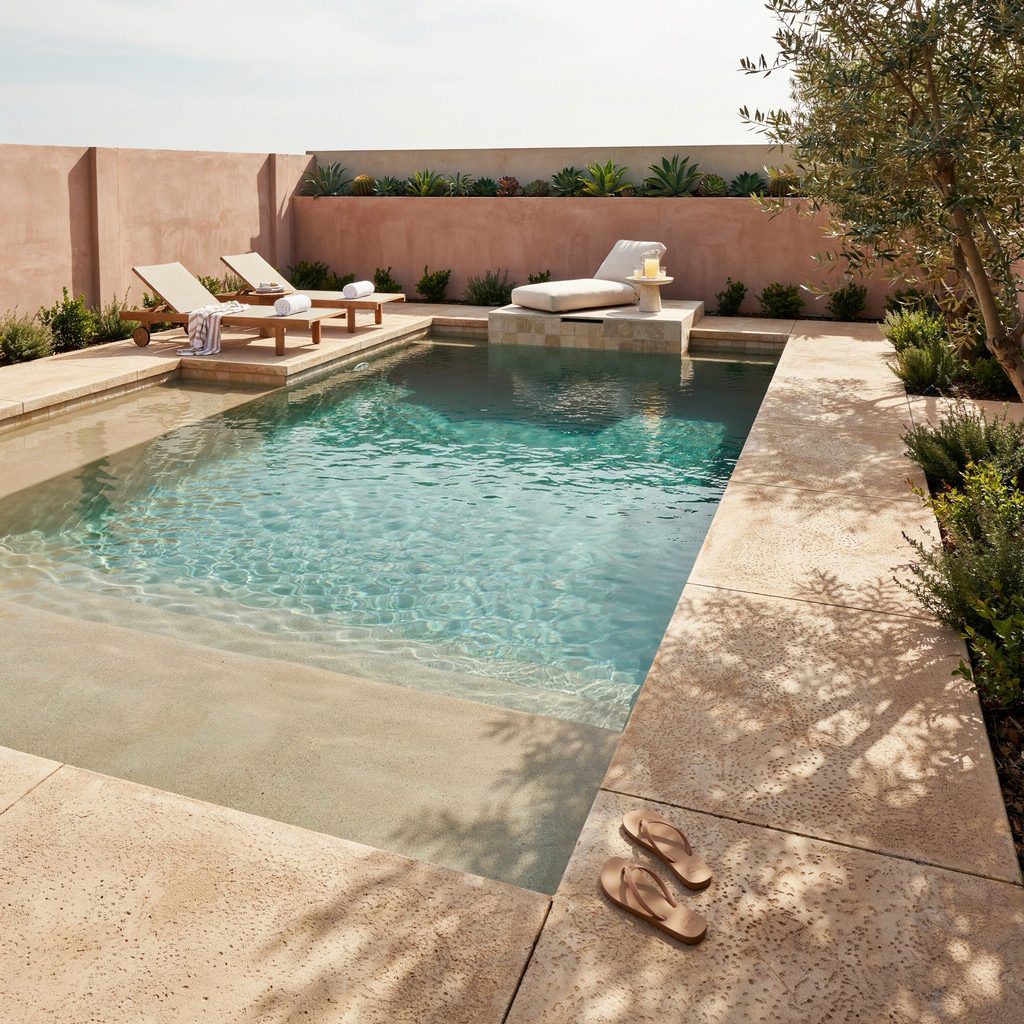
At its core, a sun shelf (also called a Baja shelf, Baja ledge, or tanning ledge) is a flat, shallow platform built into the pool structure, typically sitting between 6 and 18 inches below the waterline. Think of it as a built-in bench or patio that happens to be underwater. You walk out onto it, set down a lounge chair, and sit in a few inches of water while the rest of the pool drops off into deeper swimming territory.
The terminology varies by region, which trips up a lot of first-time buyers:
- Sun shelf – the go-to term in Florida and the Southeast
- Baja shelf or Baja ledge – popular in Arizona, Southern California, and the Southwest
- Tanning ledge or tanning shelf – the generic catch-all you’ll hear from builders nationwide
They’re all the same thing. If a builder in Texas says “Baja shelf pool” and one in Georgia says “sun shelf pool,” they’re describing identical features. There’s no functional difference between a sun shelf vs. tanning ledge; it’s purely regional branding.
Typical uses include placing in-pool lounge chairs for sunbathing, creating a safe wading zone for small children, adding extra seating during backyard parties, and giving the pool a polished, resort-style aesthetic. Most sun shelves range from about 6×6 feet to 10×12 feet, though custom designs can go larger.
It’s worth distinguishing a tanning ledge pool from two similar features. A beach entry (or zero-entry pool) is a gradually sloped ramp that mimics a natural shoreline—no flat ledge, just a gentle grade. And a standard shallow end is simply the top portion of a sloped pool floor, not a dedicated flat platform. A sun shelf is intentionally flat, intentionally shallow, and usually positioned right at the pool’s entry point.
Why Sun Shelves and Baja Ledges Became So Popular
Ten years ago, a tanning ledge was a niche request. Today, it’s on roughly 60–70% of custom pool proposals in warm-climate markets. A few forces drove that shift.
Social media made them visible. Pinterest boards, Instagram Reels, and TikTok pool-build series turned the Baja shelf into a visual shorthand for “luxury backyard.” Homeowners in Scottsdale, Tampa, and Austin started screenshotting designs and walking into builder meetings saying, “I want that.”
The resort-at-home trend accelerated. Post-2020, Americans invested heavily in outdoor living. Resort-style pool features—bubblers, fire bowls, swim-up bars, and sun shelves—became ways to recreate a vacation experience without leaving the yard.
Climate made them practical. In a Florida pool sun shelf setup, or an Arizona Baja shelf pool where summer temps hit 112°F, sitting in six inches of water beats sitting on a hot deck chair. You stay cool without fully committing to a swim.
Families loved the safety angle. A sun shelf for kids gives toddlers a controlled splash zone with no depth anxiety for parents.
Builders leaned in. Let’s be candid: a tanning ledge is a relatively simple structural addition that carries a healthy markup. It’s an easy upsell that makes the design render look more impressive.
Real Benefits: What Homeowners Love About Tanning Ledges
Let’s talk about the pros and cons of tanning ledges starting with the good stuff, because when these features are designed well, owners genuinely love them.
Relaxation and everyday comfort. The number-one reason people use their sun shelf daily is simple: you get the cooling benefit of water without getting your hair wet or needing to swim. Read a book, nap in the afternoon shade, or scroll your phone with your feet in the water. In-pool lounge chairs make this effortless.
Family safety and accessibility. For families with children under five, a dedicated 6-to-9-inch wading area means kids can play independently while you sit two feet away. Older adults, post-surgery patients, or less confident swimmers can enjoy the pool without navigating a ladder or deep end. One couple we spoke with in Orlando said their sun shelf became their mother’s favorite spot after hip surgery—she could walk in, sit down, and feel the water without any fall risk.
Entertaining without extra furniture. During a backyard barbecue, a Baja shelf pool gives guests a natural place to gather with drinks, feet in the water, no extra chairs needed. It creates a social “front porch” inside the pool. Add a pool umbrella sleeve and you’ve got instant shade coverage for four or five people.
Aesthetic punch. A well-proportioned tanning ledge breaks up the visual monotony of a rectangle of blue water. It makes the pool look custom, layered, and high-end. The shallow, reflective surface also makes a medium-sized pool feel larger.
Multi-functionality. Some owners use the ledge for morning coffee, as a dog-friendly splash zone, or as a staging area for pool toys. It’s flexible real estate.
The Downsides and Common Regrets
Now the honest part. Not everyone who adds a sun shelf ends up thrilled. Here are the most common complaints.
Lost swimming space. If your pool is already modest—say 14×30 feet—carving out an 8×10 sun shelf noticeably shrinks your usable swim area. For a small pool with sun shelf ambitions, the trade-off can feel painful. Lap swimmers and serious exercisers rarely appreciate giving up length or width to a ledge they’ll use once a month.
Higher upfront cost. A tanning ledge isn’t free. Extra excavation, additional forming, more finish material, and labor all add up. Toss in a bubbler, an umbrella sleeve, or LED lighting, and the pool tanning ledge cost climbs quickly. We’ll break down numbers in the next section, but sticker shock is real.
Maintenance headaches. Shallow, flat surfaces are debris magnets. Leaves, pollen, sunscreen residue, and body oils settle on a Baja shelf faster than on sloped walls. Many owners report needing to skim or brush the shelf daily during peak season. Sun shelf maintenance is manageable, but it’s one more task on the list. In a tree-heavy yard, debris on the Baja shelf becomes a genuine annoyance.
Furniture frustrations. In-pool lounge chairs designed for tanning ledges run $200–$600 each. Cheaper options slide around, tip, or fade within a season. And if your shelf is sized awkwardly—too narrow or too deep for standard loungers—it becomes wasted concrete.
Climate mismatches. In cooler regions, that six-inch layer of water can feel chilly even in June. In extreme heat (think Phoenix in August), shallow water with poor circulation can heat up uncomfortably. A tanning ledge with bubblers helps, but it’s another cost.
How Much Does a Sun Shelf / Baja Tanning Ledge Cost?
Let’s get specific on the Baja shelf cost and pool tanning ledge cost so you can budget realistically.
New inground pool construction:
- Typical upcharge for a basic sun shelf: $2,000–$5,000
- Larger or oddly shaped ledges with premium finishes: $5,000–$8,000+
- Fiberglass pool tanning ledge (factory-molded option): $2,000–$4,500
- Gunite pool Baja shelf (custom-formed concrete): $3,500–$7,000+, depending on complexity
Pool remodel or retrofit:
If you want to add a sun shelf to an existing pool during a full remodel, expect $4,000–$12,000 for a straightforward addition. Complex retrofits—those requiring plumbing reroutes, structural reinforcement, or matching existing tile and coping—can push toward $14,000–$16,000+. The cost to add a Baja shelf to an existing pool is almost always higher per square foot than building it into a new shell, simply because of demolition, mobilization, and patching.
Add-ons that increase the price:
- Umbrella sleeve (sleeve + installation): $300–$800
- Bubblers or deck jets: $500–$1,500 each
- LED lighting in the shelf: $200–$600 per fixture
- Upgraded tile, coping, or pebble finish on the ledge: $500–$2,000
- Custom in-pool furniture: $200–$600 per chair
Regional pricing differences: Labor and material costs in California, the Northeast, and major metros like Seattle or Chicago run 20–35% higher than national averages. Texas custom pool features, Florida pool builds, and Arizona Baja shelf projects tend to be more competitively priced because of the sheer volume of pool construction in those markets.
Design Tips to Make a Tanning Ledge Actually Useful
A poorly designed sun shelf is an expensive shelf for leaves. Here’s how to get it right.
Size and placement. Aim for a minimum of 6×6 feet if you want one lounger, or 8×8 feet for two chairs plus a small table. Place the ledge adjacent to the pool’s main entry—steps or a beach entry—so you can walk straight onto it. Leave at least 18–24 inches of walking space behind any furniture.
Depth matters. The ideal depth for a tanning ledge is 6–9 inches if your primary use is lounging in chairs. Go up to 12–18 inches if you want a more functional wading area for kids. Anything deeper than 18 inches starts to defeat the purpose; you’re just building a very expensive shallow end.
Circulation is non-negotiable. Work with your builder to position at least one return jet aimed across the shelf surface. A tanning ledge with bubblers looks great and keeps water moving, preventing stagnation and reducing debris buildup. Without good flow, you’ll be skimming daily.
Plan your shade. A pool umbrella sleeve set into the shelf is the simplest solution. Alternatively, position the ledge under a pergola, shade sail, or the shadow of the house. Think about sun angles at 10 a.m., noon, and 4 p.m. before committing to placement.
Choose furniture carefully. Buy in-pool loungers rated for your specific water depth. Measure the shelf before purchasing. Removable furniture is easier to store in winter; built-in benches look sleeker but limit flexibility.
Small-yard workaround. For sun shelf ideas for small pools, consider an L-shaped ledge that wraps a corner rather than a large rectangle. You get the lounging benefit without sacrificing the center swim lane.
Sun Shelf vs. Beach Entry: Which Is Right for You?
This is one of the most common questions we hear: sun shelf vs. beach entry—which should I pick?
A beach entry (also called a zero-entry pool) is a gently sloped ramp, usually 4–8 feet long, that transitions from deck level down into deeper water. There’s no flat ledge; the floor grades continuously.
Space: A beach entry typically needs 6–10 feet of linear pool length just for the slope. A sun shelf can be tucked into a corner or alongside the pool wall, often using less overall footprint.
Cost: Beach entries are generally more expensive to build ($3,000–$10,000+) because of the grading, waterproofing, and slip-resistant finishes required.
Usability: Beach entries excel for wheelchair access, very young toddlers, and elderly swimmers who need a gradual transition. Sun shelves are better for stationary lounging and furniture placement.
Best of both: Some designs combine the two—a short beach entry leading onto a flat tanning ledge. It costs more but maximizes accessibility and usability.
If your priority is a zero entry pool vs. tanning ledge decision, ask yourself: Do I need a ramp for mobility, or do I want a flat spot to park a chair? That answer usually settles it.
Do Tanning Ledges Add Resale Value?
Short answer: they add marketability, not necessarily appraised dollar value.
In warm-climate markets—Florida, Arizona, Southern California, Texas—a well-designed sun shelf makes a pool feel more modern and move-in ready. Buyers touring homes in Scottsdale or Naples see it as a premium feature, similar to an outdoor kitchen or upgraded landscaping. It can help your listing stand out and potentially shave days off your time on market.
Does a tanning ledge add value in a strict appraisal sense? Rarely on a dollar-for-dollar basis. Appraisers typically value the pool as a whole, not individual features. However, among pool features that increase home value in buyer perception, a tanning ledge ranks near the top alongside good lighting, a clean finish, and functional landscaping.
The caveat: an oversized, poorly placed ledge in a small pool can actually turn off buyers who want swim space. And in cooler climates like the Pacific Northwest or upper Midwest, a buyer may see it as wasted square footage.
Who Should (and Shouldn’t) Get a Sun Shelf?
A sun shelf is a great fit if you:
- Live in a warm climate and use your pool 5+ months a year
- Love entertaining and want a built-in social gathering spot
- Have toddlers or young kids who need a safe, shallow splash zone
- Prioritize lounging, reading, and relaxing over swimming laps
- Are building a resort-style backyard and want layered, custom aesthetics
Think twice (or skip it) if you:
- Have a very small yard and need every square foot of open water for swimming
- Want a dedicated lap pool or fitness-oriented setup
- Live in a cooler climate with a swim season under three months
- Are on a tight budget and the added cost plus ongoing maintenance feels like a stretch
- Dislike any extra cleaning tasks and already struggle to keep up with pool care
Maintenance Tips for Tanning Ledges
Sun shelf maintenance isn’t complicated, but it is slightly more involved than a standard sloped pool floor.
- Skim daily during peak leaf season or after windy days. A fine-mesh hand skimmer works best for the shallow surface.
- Brush the ledge weekly with a soft pool brush to prevent sunscreen, body-oil, and algae buildup. Tanning ledge cleaning tips always start here—neglect the brushing and you’ll see a greasy film within a week.
- Check circulation monthly. Make sure return jets are still directing flow across the shelf. Adjust if you notice stagnant pockets or debris settling in one corner.
- Monitor chemistry. Shallow water heats faster and evaporates faster, which can concentrate contaminants. Test and balance chemicals as usual, but pay extra attention after heavy use.
- Use a pool cover during off-season or extended vacations to cut down on debris on the Baja shelf.
Final Verdict: Are Sun Shelves and Baja Tanning Ledges Worth It?
After weighing the pros and cons of tanning ledges, here’s the bottom line: sun shelves and Baja tanning ledges are worth the hype if they match how you actually use your pool.
For a family in Tampa with two kids under six, a well-placed 8×8 sun shelf becomes the most-used square footage of the entire backyard. For a couple in Scottsdale who hosts friends every weekend, a Baja shelf with bubblers and an umbrella is the social anchor of the pool. For those homeowners, the $3,000–$6,000 upcharge pays for itself in enjoyment within the first summer.
But for a fitness swimmer in Minnesota who uses the pool ten weeks a year, or a budget-conscious buyer already stretching to afford the base pool, a tanning ledge becomes an expensive shelf for leaves and regret.
The key is intentional design. Get the depth right (6–12 inches for lounging, up to 18 for kids). Size it for real furniture. Plan circulation so it doesn’t become a debris trap. Add shade. And resist the urge to make it huge just because the render looks impressive.
Are Baja shelves worth it? For the right homeowner, in the right climate, with the right design—absolutely. They’re one of those rare pool features that looks great and gets used daily. Just make sure “right homeowner” describes you before you sign the change order.