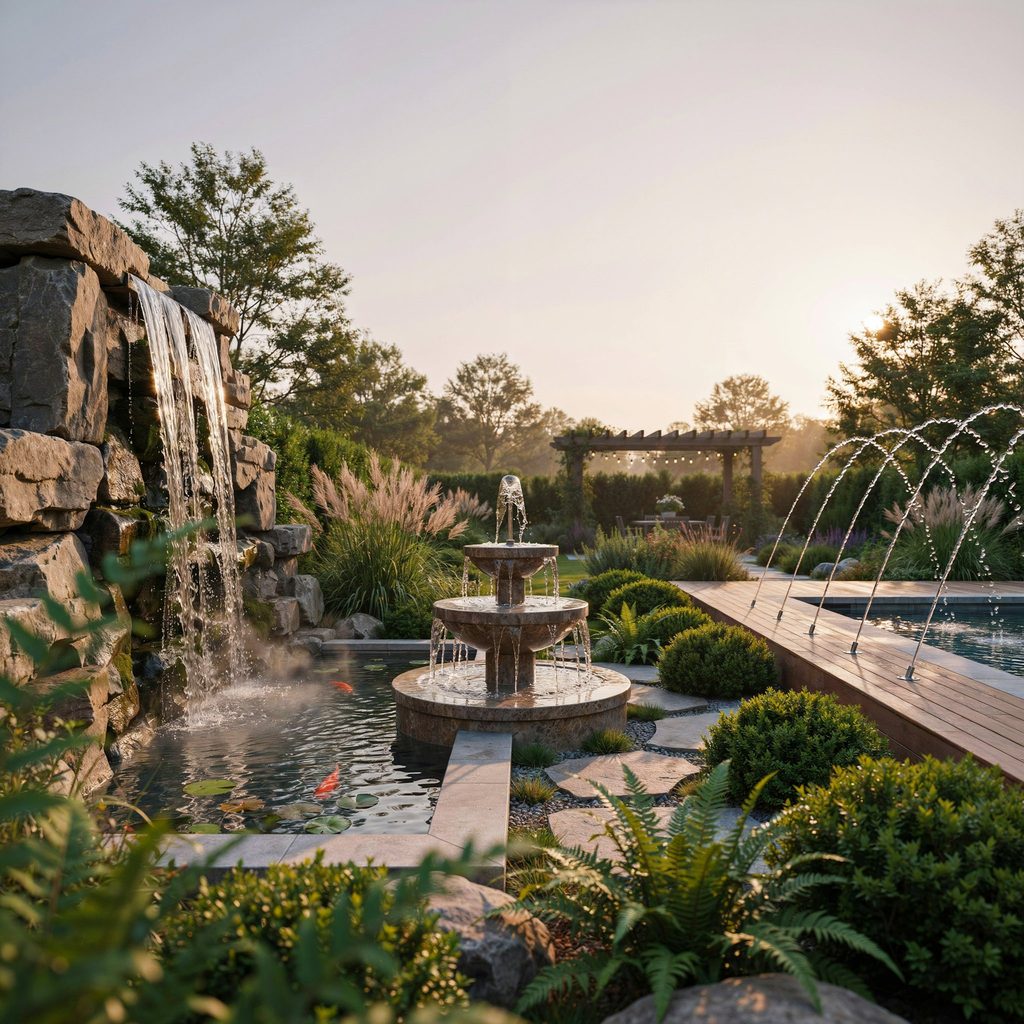
There’s a reason pool water features and backyard water features consistently top homeowner wish lists across the country. The sound of moving water lowers stress, masks traffic noise, and turns an ordinary patio into a private retreat. But walk into any landscape supply yard or scroll through contractor portfolios, and you’ll face a flood of options. Should you go with a tumbling rock waterfall for pool, an elegant freestanding fountain, or a row of sleek deck jets for pool?
This guide breaks down the three most popular categories—waterfalls, fountains, and deck jets—so you can match the right feature to your space, style, budget, and maintenance tolerance. By the final section, you’ll have a clear decision framework you can bring straight to your contractor.
Understanding Your Goals: Sound, Style, and Function
Before you price out a single pump, pause and answer three questions:
- What do you want to feel? Soothing white noise for relaxation? Visual drama that stops guests mid-conversation? Interactive water play the kids can run through?
- What’s your design language? Tropical and lush, clean and modern, Mediterranean with warm stone, or minimalist with sharp lines? The best water features for backyard spaces echo the architecture around them rather than fight it.
- When will you use it most? If evening gatherings dominate, outdoor water feature lighting becomes a priority. If you want year-round enjoyment in milder climates, winterizing water features matters less—but in the Midwest or Northeast, it’s non-negotiable.
Choosing water features for pool areas or standalone garden settings starts here. Match the feature type to your primary goal, and every downstream decision—size, material, placement—gets easier.
Waterfalls: Natural Drama and Focal Points
What Counts as a Residential Waterfall?
In backyard and pool contexts, “waterfall” covers several styles:
- Rock waterfalls built from natural boulders or stacked stone
- Sheer descent waterfalls (a clean, glass-like sheet of water dropping off a ledge)
- Grottos and cave features integrated into pool walls
- Pondless waterfalls that recirculate water through a hidden reservoir—no standing pond required
Best For
Large yards, tropical pool waterfall ideas, freeform pool shapes, and homeowners who want a naturalistic focal point that blends into pool landscape design.
Pros
- Strong visual impact. A well-built rock waterfall for pool becomes the centerpiece of the entire yard.
- Soothing, layered sound. Multiple tiers create a richer audio experience than a single spout.
- Functional screening. Boulders and plantings around the base can hide pool equipment or create a privacy buffer.
- Design flexibility. Works with retaining walls, slopes, and existing grade changes.
Cons
- Higher cost and complex installation. Excavation, structural support, plumbing, and rockwork add labor hours.
- More maintenance. Pumps, filters, and exposed rock surfaces invite algae control in water features to become a recurring task.
- Style mismatch risk. A chunky natural-rock cascade can look out of place beside a modern pool design water features scheme.
Typical US Cost Ranges (Installed)
| Type | Price Band |
|---|---|
| Standard rock waterfall (4–6 ft wide) | $3,000 – $15,000+ |
| Sheer descent waterfall | $1,500 – $6,000 |
| Custom grotto or multi-tier feature | $10,000 – $30,000+ |
| Pondless waterfall (standalone) | $2,500 – $8,000 |
Maintenance & Climate Tips
- Run a weekly algae check in warm months; brush rock surfaces monthly.
- In freeze-thaw regions (zones 5 and below), winterizing water features means draining the pump, blowing out lines, and covering rockwork to prevent ice damage.
- Inspect the pump and inline filter every spring before opening season.
Design Tip
Place the waterfall where prevailing breeze carries sound toward your seating area. Integrating it into a slope or retaining wall reduces the amount of structural build-out and makes the feature look like it’s always been there.
Fountains: Elegance, Aeration, and Flexibility
Types You’ll Encounter
- Wall fountains for patio spaces (mounted or freestanding panels)
- Freestanding garden fountains (urns, tiered basins, modern sculptures)
- Aerator fountains for ponds or large pools
- Floating pool fountains that sit on the water surface
Best For
Smaller yards, courtyards, formal gardens, patios without a pool, and anyone searching for garden fountain ideas that don’t require major excavation. A water feature for small yard spaces is almost always a fountain of some kind.
Pros
- Enormous style range. From a classic terracotta urn to a brushed-steel modern sculpture, fountains adapt to any architecture.
- Easier installation. Many garden fountains need only a level surface and a standard outlet. Pool-mounted models tie into existing plumbing.
- Aeration benefit. In ponds or large pools, fountain spray increases oxygen levels and helps with algae control in water features.
- Noise masking. Even a modest wall fountain for patio use can drown out street traffic or nearby neighbors.
Cons
- Wind drift and splash. Open, breezy sites can send spray onto pavers or furniture.
- Mineral buildup. Hard-water areas (Arizona, parts of Texas, the Southwest) leave white scale on surfaces, demanding regular descaling.
- Electrical needs. Larger or illuminated fountains may require a dedicated GFCI circuit.
Typical US Cost Ranges (Installed)
| Type | Price Band |
|---|---|
| Small garden or patio fountain | $500 – $2,000 |
| Mid-size wall or tiered fountain | $1,500 – $4,000 |
| Custom pool fountain (scuppers and water walls included) | $2,000 – $8,000+ |
| Floating aerator fountain | $800 – $3,000 |
Maintenance & Climate Tips
- Descale surfaces every 4–6 weeks in hard-water regions using a vinegar solution or commercial descaler.
- Check pump intake screens monthly for leaves and debris.
- In cold climates, drain, disconnect, and store the pump indoors before the first hard freeze.
Design Tip
Scale the fountain to the patio. A 3-foot-tall urn beside a 600-square-foot deck looks balanced; the same urn on a 2,000-square-foot pool deck disappears. Choose materials—travertine, cast stone, copper, stainless steel—that echo your home’s exterior finishes.
Deck Jets: Modern, Playful, and Budget-Friendly
What Are Deck Jets (and Their Cousins)?
Deck jets are small, adjustable nozzles set into the pool deck or coping that shoot arcs of water into the pool. Related features include:
- Laminar jets – produce a smooth, glass-rod stream with optional LED color
- Pool bubblers – gentle vertical sprays, often placed on tanning ledges
- Scuppers – rectangular spouts mounted in a wall or raised beam
Best For
Modern pool design water features, family-friendly pool features, tanning ledges, and homeowners who want clean lines with interactive water play.
Pros
- Lower cost, simpler install. Deck jets for pool projects often tie into existing return plumbing with minimal deck cutting.
- Kid-friendly. Arcs land in shallow water, making them safe for children and pets.
- Sleek aesthetic. No bulky rockwork; the hardware is nearly invisible when off.
- Nighttime wow factor. Pair with RGB LED lighting for glowing arcs after dark.
Cons
- Subtler sound. You get a gentle splash, not the enveloping roar of a waterfall.
- Clogging risk. Fine debris can block nozzles; inline filters are a must.
- Less “wow” from a distance. The visual impact is refined rather than dramatic.
Typical US Cost Ranges (Installed)
| Type | Price Band |
|---|---|
| Standard deck jet (per jet) | $500 – $1,500 |
| Laminar jet with LED (per jet) | $1,200 – $2,500 |
| Scupper or water-wall spout | $800 – $2,000 |
| Pool bubbler (per unit) | $400 – $1,000 |
Maintenance & Climate Tips
- Remove and soak nozzles in a descaling solution monthly during swim season.
- Inspect inline strainers weekly; a clogged filter drops pressure and uneven arcs.
- In freeze zones, blow out jet lines and cap fittings before winter.
Design Tip
Space deck jets 3–4 feet apart for a rhythmic look. Angle them 15–25 degrees so arcs land inside the pool, not on the deck. Mixing two or three deck jets with a pair of pool bubblers on a tanning ledge gives you layered movement without a six-figure budget.
Quick Tip: How to Reduce Splash from Deck Jets
If wind or angle sends spray onto the deck, lower the arc height by adjusting the nozzle throat or install a small wind screen (a raised coping lip or glass panel) on the upwind side. Laminar jets, because they produce a solid stream rather than a spray, are inherently less splash-prone.
Side-by-Side Comparison: Waterfalls vs. Fountains vs. Deck Jets
| Criteria | Waterfalls | Fountains | Deck Jets |
|---|---|---|---|
| Visual impact | High – natural drama | Medium–High – style-dependent | Medium – clean, modern |
| Sound level | Loud, layered | Soft to moderate | Gentle splash |
| Installation complexity | High (excavation, rockwork) | Low–Medium | Low–Medium |
| Typical US cost | $3,000–$30,000+ | $500–$8,000+ | $500–$2,500 per jet |
| Maintenance level | Moderate–High | Low–Moderate | Low |
| Best design styles | Tropical, natural, rustic | Formal, Mediterranean, modern | Contemporary, minimalist |
| Family / kid / pet friendly | Moderate (watch slippery rocks) | Moderate (standing water) | High (shallow, interactive) |
| Climate considerations | Winterize in freeze zones; evap. in arid zones | Descale in hard-water areas | Blow out lines before freeze |
Climate, HOA, and Practical Considerations for US Homeowners
Regional Guidance
- Northeast & Midwest (zones 4–6): Plan for a full winter shutdown. Drain pumps, blow out plumbing, and cover rockwork or fountain basins. Recirculating water features should be switched off once temps dip below 32 °F to avoid cracked housings.
- Southwest & arid regions: Evaporation can claim ¼ inch or more per day in summer. Size your autofill valve accordingly, and consider a wind-protected placement. Energy-efficient pool pumps with variable-speed motors cut run-time costs significantly.
- Southeast & Gulf Coast: Humidity accelerates algae growth. Use UV clarifiers or algaecides designed for recirculating water features, and keep standing water moving to deter mosquitoes.
HOA and Local Code Considerations
Before pulling a permit, check your HOA’s CC&Rs for:
- Noise restrictions (many communities cap water feature noise level after 10 p.m.)
- Height limits on freestanding fountains or scuppers and water walls
- Setback rules requiring features to sit 3–5 feet from property lines
A quick call to your municipal building department clarifies whether you need an electrical permit, a plumbing permit, or both for pool water feature installation.
Energy and Water Efficiency
- Install a variable-speed pump sized to the feature’s GPM needs; it can cut energy use by 50–70 % versus a single-speed unit.
- Use timers or smart-home automation so features run only during hours you’ll enjoy them.
- Choose recirculating water features over once-through designs to minimize water waste.
Budget Hack: Start with One Feature and Expand Later
You don’t have to build everything at once. Install two deck jets this season, add a sheer descent waterfall next year, and finish with landscape lighting the year after. Designing plumbing stubs and conduit during the initial pool build keeps future add-on costs low.
How to Choose: A Simple Decision Framework
Follow these five steps to narrow your options fast:
- Define your primary goal. Rank these: soothing sound, visual drama, kid-friendly play, modern aesthetic, aeration.
- Measure your space. Note deck dimensions, slope, existing plumbing, and electrical access. A water feature for small yard spaces will steer you toward fountains or a compact pondless waterfall.
- Set a realistic budget. Include the feature, installation, permitting, and estimated annual maintenance. Luxury pool upgrades can escalate quickly; a cap keeps the project sane.
- Match to style and climate. Tropical backyard oasis ideas pair with rock waterfalls; modern pool design water features favor laminar jets and scuppers.
- Get 2–3 local quotes. Ask each contractor about pump specs, warranty length, winterization support, and references from projects completed in the last two years.
Quick Personas
- The Relaxation Seeker → A multi-tier rock waterfall or a large tiered fountain with warm uplighting.
- The Modern Minimalist → Three laminar jets with color-changing LEDs plus a single sheer descent waterfall.
- The Family Host → Four deck jets aimed at a tanning ledge, two pool bubblers for the kids, and a modest wall fountain by the outdoor kitchen.
Installation and Maintenance Tips
DIY vs. Hiring a Pro
- DIY-friendly: Plug-in garden fountains, floating aerators, simple pondless waterfall kits.
- Call a licensed contractor: Anything involving concrete cutting, gas-line proximity, new 220 V circuits, structural retaining walls, or integration with pool plumbing. Pool water feature installation that touches the main drain or return lines should always be handled by a certified pool builder.
Key Questions for Your Contractor
- What pump size (HP and GPM) are you specifying, and is it variable-speed?
- What filter type is included, and how easy is it to access for cleaning?
- What does the warranty cover—pump, rockwork, liner, plumbing—and for how long?
- Do you offer a seasonal opening/closing service, or can you walk me through winterizing water features myself?
Seasonal Checklist (At a Glance)
- Spring: Inspect for cracks, clean filters, test pump, refill, balance water chemistry.
- Summer: Weekly debris removal, monthly descale (hard-water areas), check autofill.
- Fall: Trim surrounding foliage, net the feature during leaf drop.
- Winter (freeze zones): Drain, blow out lines, remove and store pumps, cover basins.
Conclusion
Choosing between waterfalls, fountains, and deck jets isn’t about finding a single “best” option—it’s about finding the best fit for your backyard. Waterfalls deliver unmatched natural drama and layered sound. Fountains offer elegance, flexibility, and a gentler price of entry. Deck jets bring modern style, family fun, and the lowest barrier to installation.
Clarify your goal, respect your budget, account for your climate, and the right choice becomes obvious. A well-chosen water feature doesn’t just upgrade your pool or patio; it changes how you use your outdoor space every single day—and it’s one of the surest ways to boost curb appeal and property value.