It’s Saturday afternoon, and you’ve just settled onto a lounge chair beside the water when you notice it: the neighbor’s second-story window, the rooftop deck behind yours, or headlights sweeping in from the street. Suddenly your pool feels less like a retreat and more like a stage. If that sounds familiar, you’re not alone—and the good news is that the right privacy ideas for your backyard swimming pool space can turn an exposed patio into a true oasis.
Pool privacy is about more than appearances. Seclusion makes sunbathing more relaxing, entertaining more comfortable, and quiet morning swims more restorative. Well-placed screens also soften neighborhood noise, block wind, and add welcome shade. As you review these backyard pool privacy ideas, weigh a few key factors:
- Yard size and layout
- Budget, from DIY dollars to major construction
- Desired level of seclusion
- Local climate and severe weather patterns
- Maintenance preferences
- Pool safety requirements
- HOA rules and local regulations
The ten swimming pool privacy ideas below range from inexpensive pool privacy ideas, like container plants and outdoor curtains, to permanent solutions such as privacy fences, walls, and full pool enclosures.
1. Install a Privacy Fence Around the Pool
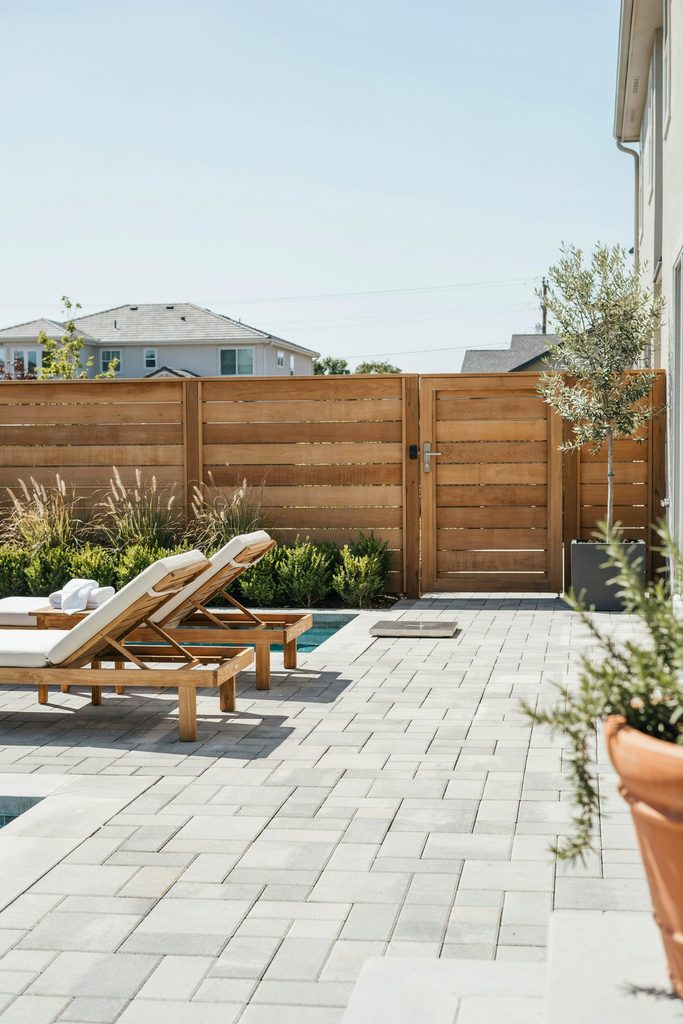
When you want dependable backyard privacy from neighbors, few options beat a well-built privacy fence. A continuous barrier blocks ground-level neighbor visibility on shared property lines and can even deliver pool privacy from the street when it wraps the front-facing side of the yard.
Material choices shape both looks and upkeep. Cedar and pressure-treated pine offer classic warmth but need staining every few years. Vinyl fencing resists rot, insects, and pool splash with almost no care. Composite fencing costs more upfront but won’t warp, fade, or splinter. Stylistically, a horizontal wood fence reads modern while vertical boards feel traditional; solid panels give full seclusion, while shadowbox or spaced-picket designs preserve airflow and light. Ornamental options like a wrought iron fence or glass fence look elegant but expose the water, so pair them with hedges or curtains if seclusion is the goal.
Matching privacy to pool safety codes
Most homeowners choose 6-foot heights, though local building codes and HOA restrictions may cap height or dictate setbacks. Remember that a privacy fence and a code-compliant safety barrier aren’t automatically the same thing: many jurisdictions require pool barriers with self-closing, self-latching gates and limited gaps for child safety. Confirm whether your pool fence and privacy screen can serve as one structure before you build.
Best for: year-round, whole-pool seclusion. Maintenance: low (vinyl, composite) to moderate (wood).
2. Use Layered Privacy Landscaping
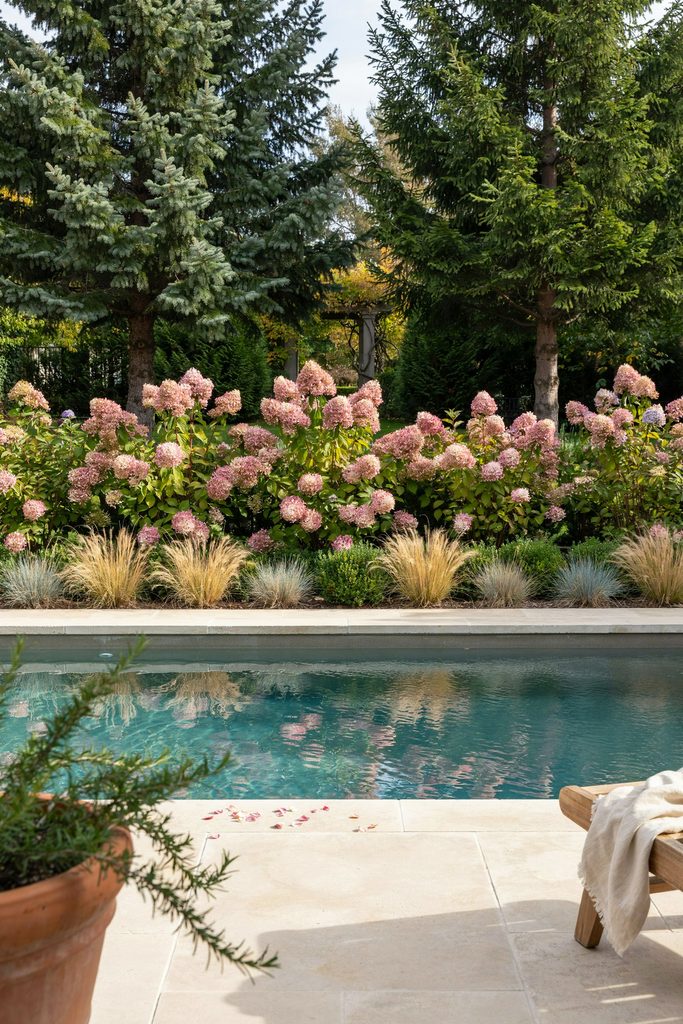
If a solid fence feels imposing, privacy landscaping around a pool creates a softer living buffer. The technique is layering: tall evergreen trees in back, medium-height flowering shrubs in the middle, ornamental grasses and perennials in front, and low-growing border plants along the pool deck edge. Raised planters and container plants extend the same effect across patios and other hardscaping where digging isn’t possible.
Layers break up straight sightlines, absorb sound, and turn utilitarian screening into attractive poolside landscaping ideas. To keep water clean, favor low-litter poolside privacy plants, skip heavy-dropping species near the surface, and consider pollen if swimmers have allergies. Study each plant’s mature height and width, keep root systems away from decking and underground plumbing, and space plants so they fill in without crowding.
Always match selections to your USDA hardiness zone and rainfall patterns; local nurseries or extension offices can confirm suitability. Done well, these natural pool privacy barriers add gentle shade and a resort-like feel.
3. Plant Fast-Growing Privacy Trees or Hedges
For a living screen that improves every season, few strategies perform better than fast-growing privacy hedges. Reliable choices include arborvitae (such as ‘Green Giant’), Nellie R. Stevens holly, wax myrtle, podocarpus, and Italian cypress in warm, dry climates. Clumping bamboo lends a contemporary look—just verify it’s clumping, not running, since running bamboo spreads aggressively and can damage decks and pipes.
Speed alone doesn’t guarantee success. Compare mature height and width against the sightlines you need to block, space plants slightly closer than their full spread for a dense screen (often 5–6 feet apart for arborvitae), and budget for regular trimming. Evergreens deliver four-season coverage; check each candidate’s tolerance for wind, drought, and cold snaps in your region, and water new plantings deeply through their first two seasons.
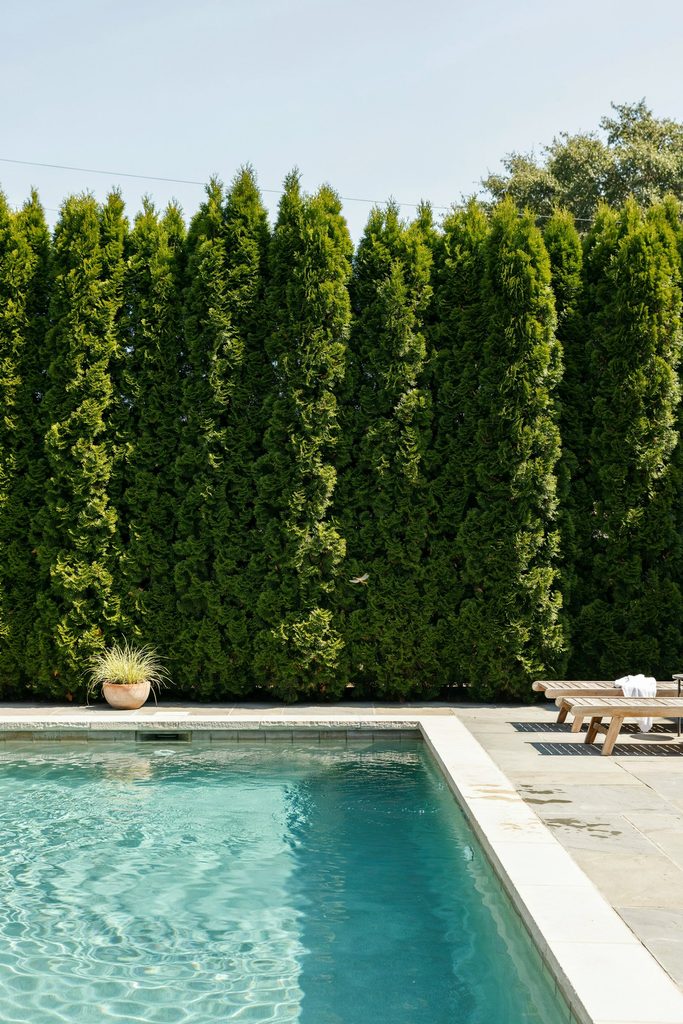
Never plant trees against the pool shell, deck joints, underground lines, or property lines—roots and leaf drop create expensive problems. A local nursery or landscaper can point you to the best trees for pool privacy that thrive in your soil without becoming invasive.
4. Add a Pergola With Outdoor Curtains
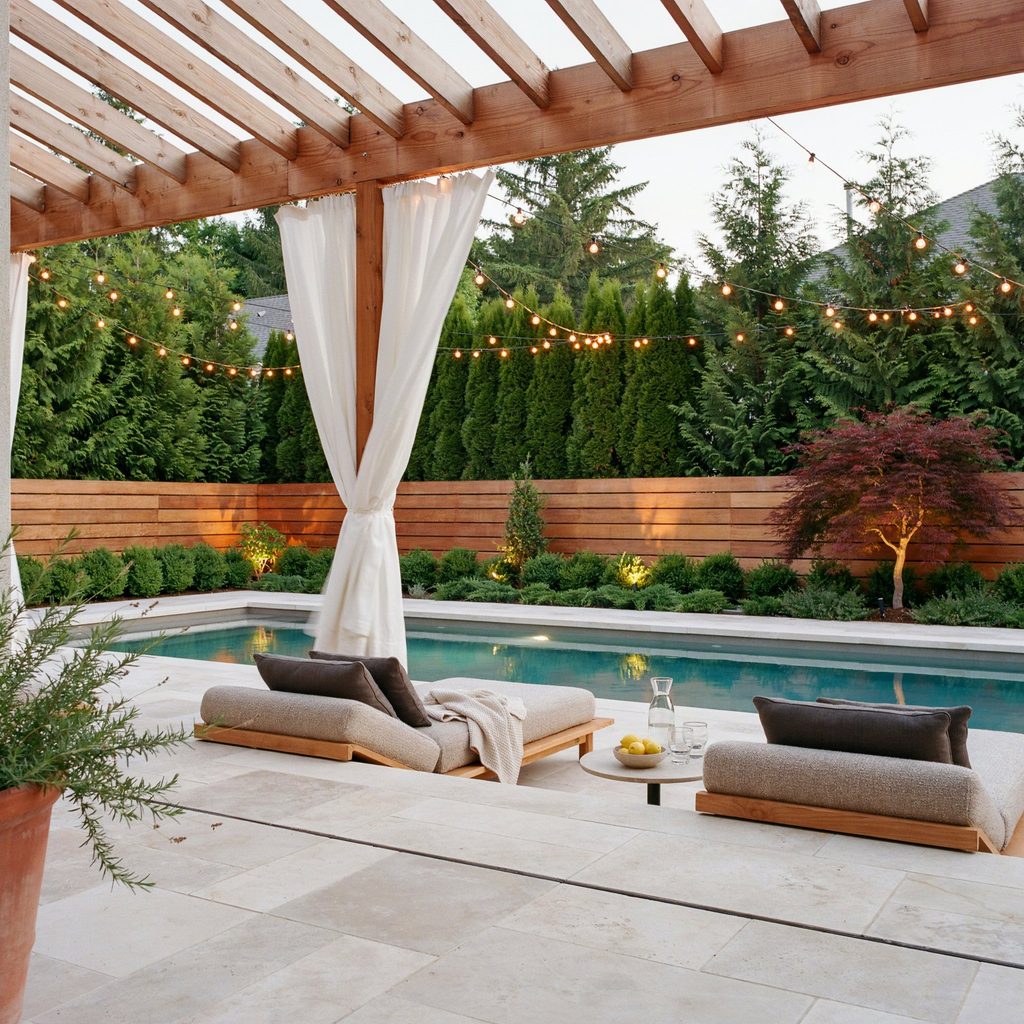
A pool pergola with curtains delivers shade, architectural interest, and on-demand seclusion. Hang outdoor curtains or weather-resistant drapes from the beams and you can close off a lounge, dining set, hot tub, or changing nook in seconds—then tie them back when you want breeze and open sky. Roll-down shades, retractable privacy screens, privacy panels, climbing vines, and adjustable louvers add even finer control over sun and sightlines.

Fabric and wind basics
Choose solution-dyed acrylic or polyester fabrics rated for UV protection and mildew resistance, and look for weighted hems or tie-backs so panels don’t sail in gusts. Anchor posts in concrete footings for wind resistance, and rinse fabrics occasionally to remove chlorine exposure and sunscreen residue.
Understand the trade-off: these outdoor curtains for pool areas create targeted pool area shade and privacy exactly where you sit, rather than enclosing the entire water surface. That makes them perfect partners for fences or plantings that handle the perimeter.
5. Build a Poolside Privacy Wall or Screen
Sometimes you only need to block one offending view—a neighbor’s picture window, the equipment pad, an outdoor shower. A dedicated privacy wall around swimming pool areas solves precisely that without fencing the whole yard. Options include wood slat walls, lattice panels, decorative metal panels, composite panels, concrete or stucco walls, stone veneer, modern geometric screens, and frosted acrylic or polycarbonate panels that glow with light while obscuring views.
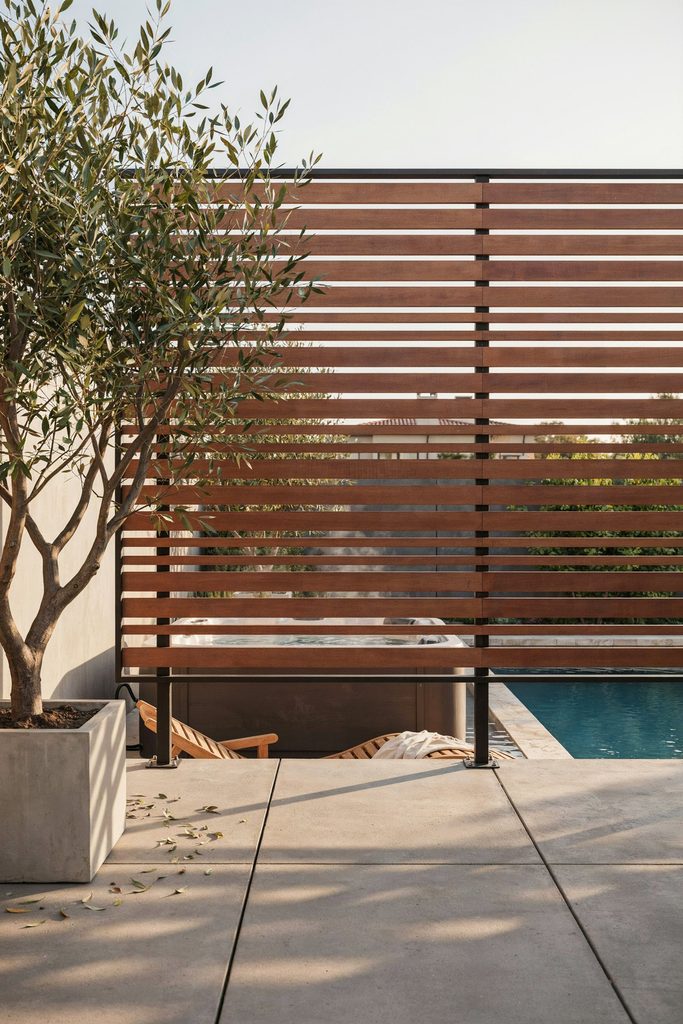
Slat spacing sets the mood: tight boards mean full seclusion, while one- to two-inch gaps preserve ventilation and dappled sunlight for a lighter, modern pool privacy ideas aesthetic. Screens work best along property boundaries, behind pool loungers, around hot tubs, beside pool equipment areas, and between the water and nearby windows.
Installation matters as much as design. Plan concrete footings below the frost line, engineer solid panels for wind load, provide drainage at the base, choose moisture-resistant materials, and pull permits where required. Professional installation is wise for masonry and tall screens.
6. Use Trellises and Climbing Plants
A trellis covered in vines is one of the most space-efficient backyard pool screening ideas available: it grows vertically, consuming almost no deck or planting area. Depending on your climate, consider star jasmine, honeysuckle, clematis, climbing roses, passionflower, or wisteria where sturdy support and diligent pruning are possible. Trumpet vine fills in fast but deserves caution—its vigorous growth can overwhelm structures.
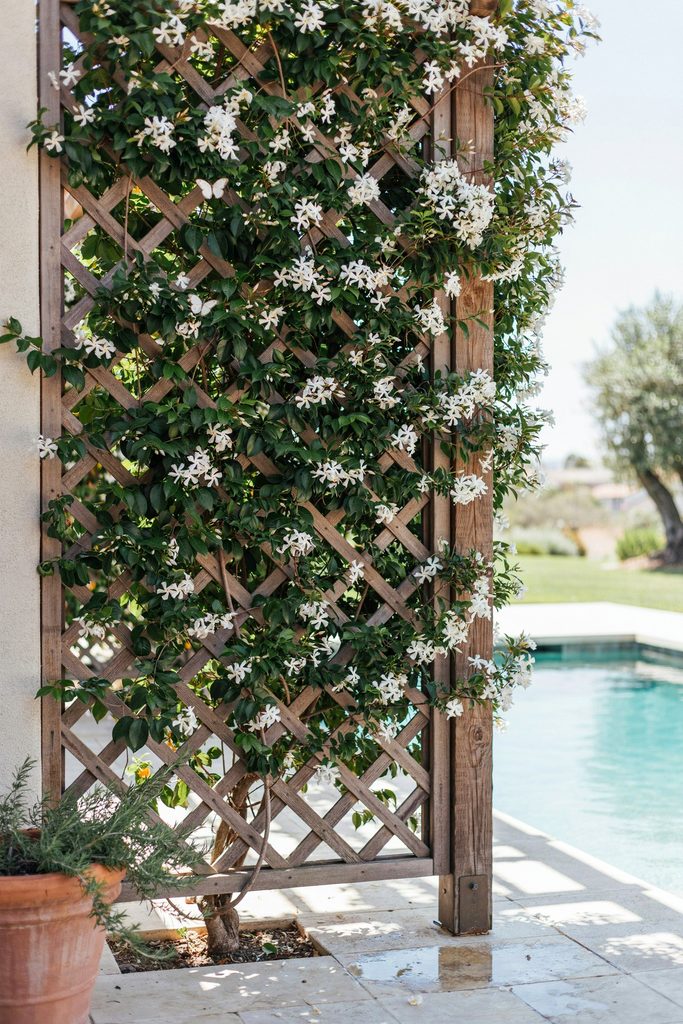
Before choosing, ask how quickly the plant covers, whether it stays evergreen or goes seasonal in your zone, and what sun and water it needs. Match support strength to the mature vine; wisteria can weigh hundreds of pounds. Prune regularly, and set trellises a few feet from the pool edge so dropped flowers and leaves stay out of the water. Position thorny climbers away from walkways and lounging spots, and watch for species with aggressive roots or insect-attracting blooms.
Stick with non-invasive varieties to protect walls, fences, and pool structures—and you’ll gain a fragrant living wall instead of a maintenance headache.
7. Install a Pool Enclosure or Screened Structure
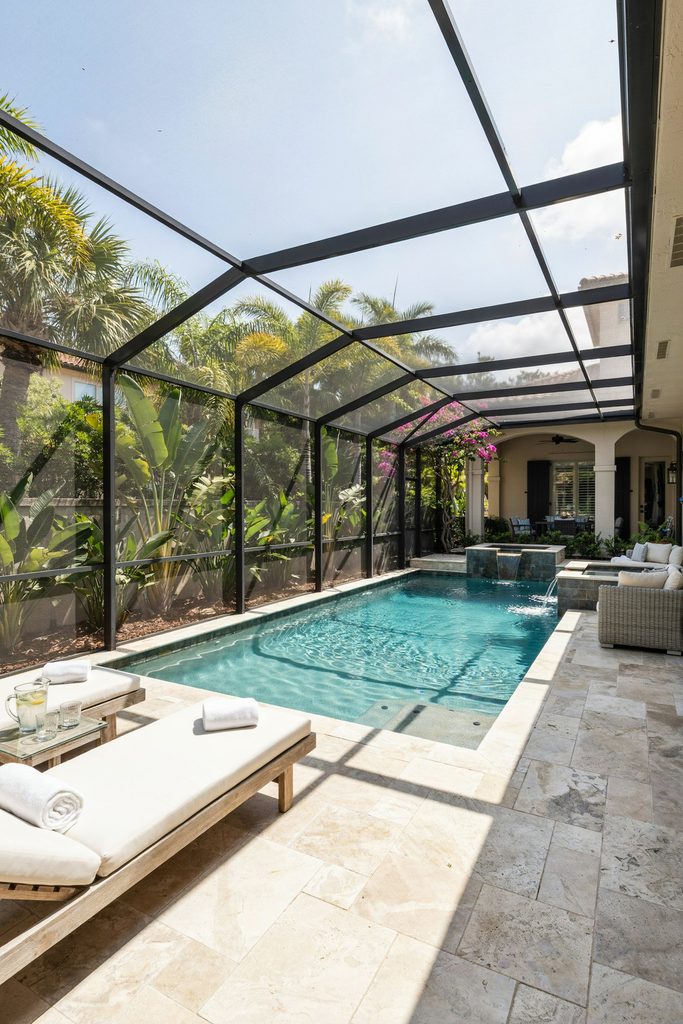
For maximum control over privacy, insects, and weather, pool enclosure ideas sit at the top of the investment ladder. A screened-in pool area—classic across the mosquito-heavy Southeast—keeps bugs and debris out while blurring outside views. Retractable enclosures open fully on perfect days, glass pool enclosures extend the season in cooler climates, and covered pool deck ideas like roofed patios or an adjacent screened porch offer partial shelter at lower cost.
Full versus partial enclosures
Full enclosures deliver the strongest seclusion but change the yard’s appearance, reduce direct sunlight, and need ventilation planning. Partial structures preserve openness while shading key zones. Maintenance ranges from occasional screen replacement to regular glass cleaning.
These are serious constructions: expect permit reviews, engineered wind ratings (critical in hurricane-prone regions), snow load calculations in northern states, and HOA approval. Costs run high to very high, so weigh the longer swim season, insect-free evenings, and added privacy against the investment.
8. Add Tall Planters and Movable Privacy Screens
Renters, small-lot owners, and anyone avoiding permanent construction will appreciate the most flexible of the inexpensive pool privacy ideas: tall planters and freestanding screens. Oversized containers holding ornamental grasses, palms in warm climates, compact shrubs, or seasonal flowers become portable green walls. Freestanding wood screens, folding privacy panels, outdoor room dividers, screens on casters, and modular composite or metal panels add instant structure with no digging and usually no permits.
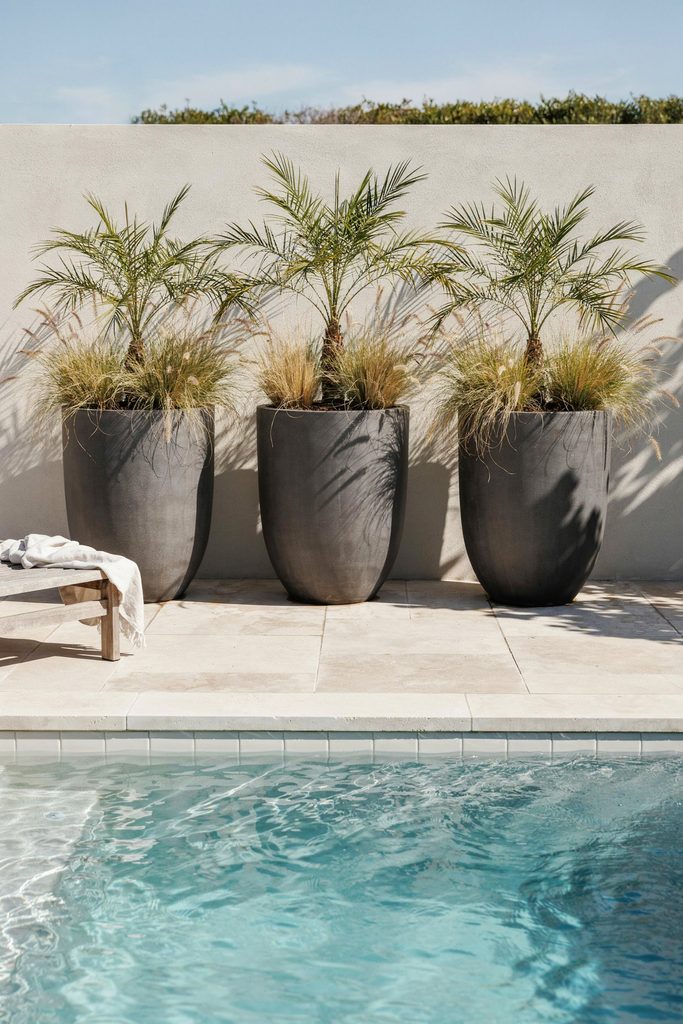
This is also the easiest DIY pool privacy screen route: reposition panels to shade a sunbathing session, screen a dinner party, or guard a changing towel, then roll them away later—ideal pool privacy ideas for small yards where every square foot counts.
Stability is the key detail. Choose heavy, wide-based planters with drainage holes and weather-resistant materials like fiberglass, composite, or powder-coated metal. In windy locations, anchor or weight screens so a gust never sends your outdoor privacy screen for pool into the water.
9. Create a Pool Cabana or Outdoor Room
Pool cabana ideas range from breezy to fully built-out, and all of them turn privacy into architecture. Open-sided cabanas with curtains frame the water while blocking low angles from nearby homes; enclosed versions add changing rooms, pool bathrooms, storage, bar areas, outdoor kitchens, or shaded lounges with built-in benches and half walls. Either way, the structure visually separates the pool from the rest of the yard, making the water feel like its own destination.
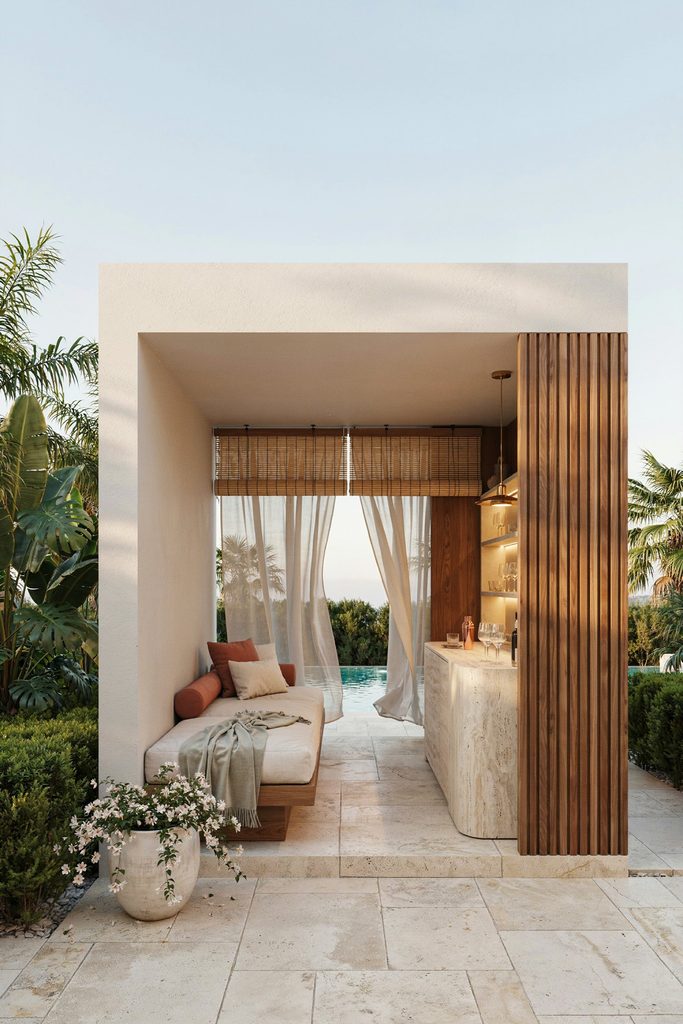
Material choices—cedar, composite, aluminum, stucco—should resist humidity and splash. Plan ventilation for enclosed rooms, route plumbing and electrical work through licensed professionals, add lighting for evening swims, and slope surrounding paving for drainage. Larger cabanas typically require permits and professional design, so check setback rules early.
For a fraction of the cost, a prefabricated gazebo or kit pergola dressed with curtains, outdoor furniture, and potted greenery delivers much of the same charm and seclusion.
10. Use a Combination of Privacy, Shade, and Poolside Design Features
The most successful private backyard pool ideas rarely rely on a single element. Pair a partial privacy fence with evergreen plants to soften its face; add tall planters to a pool pergola with curtains; back a trellis wall with climbing plants; set a pool cabana beside a landscaped screen; team a decorative privacy wall with a shade sail; or surround a screened enclosure with low-maintenance landscaping.
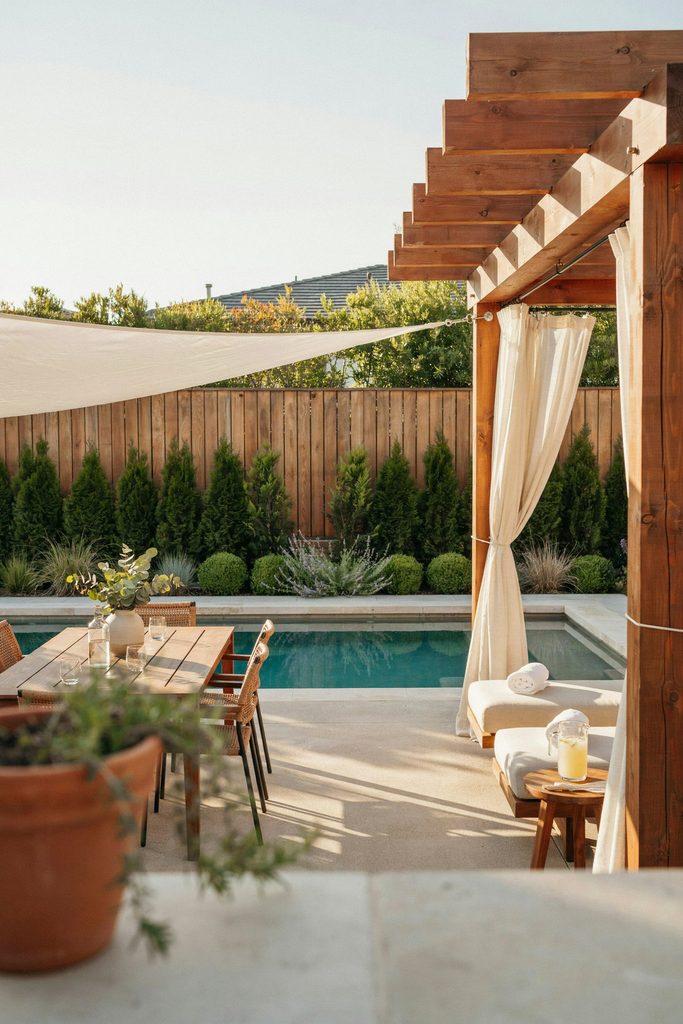
Layered design does more than hide the pool—it defines it as an outdoor room. Strategic placement of lounge chairs, umbrellas, and dining sets blocks key sightlines without cramping circulation. A water feature masks neighborhood noise, and warm outdoor lighting draws the eye inward after dark.
Most yards don’t need total enclosure. Map the exact angles—from the neighbor’s deck, the street, the second-story window—and address only those. Targeted combinations cost less, feel more open, and still deliver complete comfort.
Comparing the 10 Pool Privacy Ideas
| Privacy idea | Privacy level | Cost range | Maintenance | Best for |
|---|---|---|---|---|
| Privacy fence | High | Moderate–High (≈ $4,000–$12,000+) | Low–Moderate | Year-round, whole-pool seclusion |
| Layered landscaping | Moderate–High | Moderate (≈ $1,500–$6,000) | Moderate | Natural look on larger lots |
| Fast-growing trees or hedges | High | Low–Moderate (≈ $500–$3,000) | Moderate (pruning) | Living screens that improve with age |
| Pergola with outdoor curtains | Moderate | Moderate (≈ $2,000–$8,000) | Low–Moderate | Shade plus privacy for seating zones |
| Privacy wall or screen | High | Moderate–High (≈ $1,500–$10,000) | Low | Blocking one specific sightline |
| Trellis with climbing plants | Moderate | Low–Moderate (≈ $300–$2,500) | Moderate | Small yards and vertical greenery |
| Pool enclosure or screened structure | Very high | Very high (≈ $10,000–$50,000+) | Moderate | Insect, weather, and season extension |
| Tall planters and movable screens | Low–Moderate | Low (≈ $150–$1,500) | Low | Renters, small yards, flexible layouts |
| Pool cabana or outdoor room | Moderate–High | High (≈ $5,000–$30,000+) | Moderate | Changing space plus outdoor living |
| Combination approach | High | Moderate–High (varies) | Varies | Customized, phased privacy plans |
Dollar figures are approximate U.S. ranges that vary by location, materials, labor, project size, and site conditions. Treat them as planning guides, not guarantees or quotes.
Important Safety and Planning Considerations
Before any project, walk your yard with this checklist in mind:
- Check local building codes and pool barrier regulations; many areas mandate isolation barriers 4–5 feet high.
- Review HOA rules and neighborhood covenants for allowed materials, heights, and colors.
- Confirm property lines with a survey before building fences or walls.
- Keep emergency access clear—never block gates or paths first responders may need.
- Maintain safe visibility around the water; avoid creating blind spots where a child could go unseen.
- Keep gates self-closing and self-latching wherever code requires.
- Use non-slip surfaces on decks and paths that stay wet.
- Avoid sharp edges, unstable freestanding screens, and climbable features near safety barriers.
- Design for wind, storms, snow, and severe weather; anchor every structure.
- Protect plants and materials from chlorine exposure and saltwater pool splash.
- Plan drainage and irrigation so screens don’t trap standing water.
- Preserve access to pumps, filters, heaters, and other pool equipment.
- Hire licensed professionals for electrical, structural, plumbing, or major construction work.
This article is general guidance, not legal advice. Verify every requirement with your city, county, building department, HOA, or a qualified contractor.
Choosing Privacy Ideas for Your Backyard Swimming Pool Space: Cost and Maintenance
Privacy projects span an enormous price range. DIY plant screens and container gardens often cost a few hundred dollars. Basic outdoor curtains and freestanding screens land in the same affordable tier. Privacy fences and decorative walls typically run several thousand dollars, pergolas and cabanas range from a few thousand into the tens of thousands, and full pool enclosures or major landscaping renovations can exceed $50,000.
Remember that the cheapest upfront option often demands more later: hedges need pruning, fabric needs cleaning and eventual replacement, container plants need seasonal swaps, and wood needs staining or repainting. Factor in irrigation, plant replacement, and structural repairs when comparing bids. On the flip side, quality hardscaping and a well-designed outdoor living space can boost daily enjoyment and resale appeal, though oversized structures rarely return their full cost at sale. Balance initial price against a decade of maintenance before you commit.
Conclusion: Design a Pool Space That Feels Truly Yours
Figuring out how to make a pool area private starts with sightlines, not shopping lists. The best privacy ideas for your backyard swimming pool space balance privacy, safety, appearance, budget, maintenance, climate, local rules, and long-term durability. Stand at the water’s edge, note exactly which angles expose you, and block only those.
Then keep it simple: choose one primary privacy feature—a fence, screen, or planting bed—and combine it with one complementary feature, such as curtains, a pergola, or tall planters. Layered gradually, those choices add up to something better than secrecy: a backyard pool that finally feels like your own private resort.
Frequently Asked Questions About Pool Privacy
What is the best way to add privacy around a backyard pool?
For most homes, combining a code-compliant privacy fence or screen with layered planting works best. The fence blocks direct sightlines year-round, while trees, shrubs, and grasses soften views and absorb noise. Start by identifying exactly which angles—neighbor windows, the street, a second-story deck—need blocking, then match solutions to your budget and climate.
How can I make my pool area private from neighbors?
Target the specific sightlines neighbors actually have. A 6-foot privacy fence or slat wall along the shared boundary handles ground-level views, while tall evergreens or a pergola with outdoor curtains address upper-story windows. Movable screens and tall planters offer flexible fixes where HOA rules prohibit permanent structures.
What are inexpensive pool privacy ideas?
Budget-friendly options include tall planters with ornamental grasses, freestanding wood or composite privacy screens, outdoor curtains hung from a pergola or cable system, bamboo screening attached to an existing fence, and fast-growing hedge plants like arborvitae. Most cost a few hundred dollars and work well as weekend DIY projects.
Which plants are best for poolside privacy?
Evergreens that hold foliage year-round perform best: arborvitae, holly, wax myrtle, podocarpus, and clumping bamboo. Choose low-litter varieties to limit leaf drop in the water, avoid invasive running bamboo, and confirm ratings for your USDA hardiness zone. Ornamental grasses and flowering shrubs add mid-height layers without heavy debris.
Can a pool privacy fence also meet safety requirements?
Often yes, but not automatically. Many codes require pool barriers at least 4 feet high with self-closing, self-latching gates and limited gaps or footholds. A 6-foot privacy fence can qualify if it meets those specifications and local rules. Always confirm with your building department before assuming one fence satisfies both purposes.
How do I add privacy to a small pool area?
Think vertical and movable. Trellises with climbing plants, tall planters, folding privacy panels, and slat screens use minimal ground space. A pergola with retractable curtains adds overhead seclusion without shrinking the deck. Keep pieces proportionate so the yard feels cozy rather than cramped, and preserve clear sightlines for supervising swimmers.
Are pool enclosures worth the investment?
In regions with mosquitoes, intense sun, heavy rain, or short swim seasons, often yes. Screened or glass enclosures add privacy, exclude insects and debris, and extend usable months. They are the priciest option—frequently $10,000 to $50,000 or more—so weigh permits, maintenance, and reduced sunlight against the comfort gained.
What should I check before building a privacy wall around a pool?
Confirm property lines, local height and setback limits, permit requirements, and HOA approval. Plan footings and drainage, account for wind exposure, and keep access to pool equipment. Avoid climbable features near required safety barriers, and choose non-slip, moisture-resistant materials. A qualified contractor can verify structural and code details for your site.