You’ve just finished building your dream backyard pool. The water is crystal clear, the deck is pristine, and you can already picture lazy summer afternoons floating with a cold drink. Then someone hands you a list of “poolside landscaping ideas” and suddenly you’re staring at a garden center wondering which greenery won’t turn your paradise into a daily cleanup nightmare.
Here’s the truth: the difference between a resort-style pool and a high-maintenance headache almost always comes down to plant choices. The right selections frame your water beautifully, provide privacy, and practically take care of themselves. The wrong ones drop leaves into your skimmer every hour, send roots cracking through your coping, or leave sticky fruit stains across your deck.
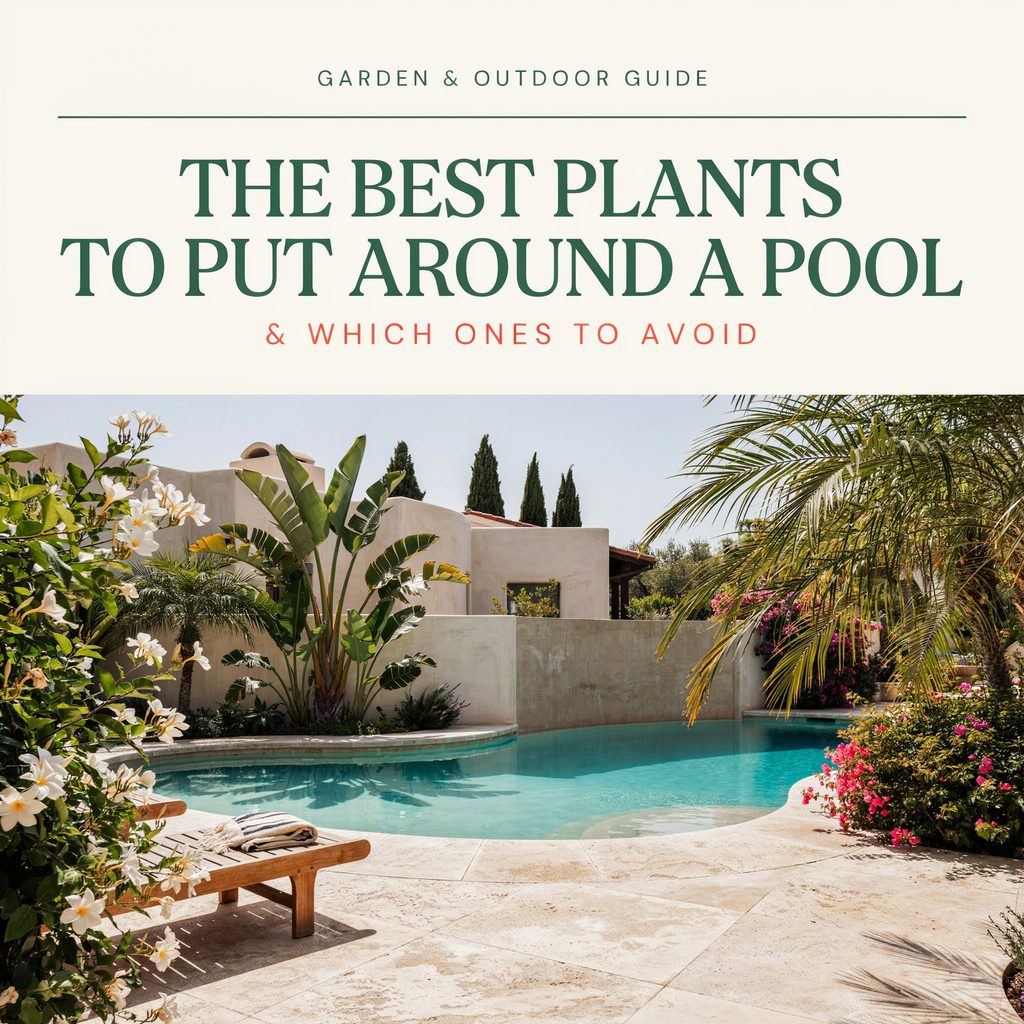
In this guide, we’ll walk you through the best plants to put around a pool for US homeowners—organized by type, climate zone, and maintenance level. We’ll also give you a clear “do not plant” list so you can skip costly mistakes. Whether you’re working with a chlorine pool in Ohio or a saltwater setup in Florida, you’ll walk away with a pool area planting guide that actually works.
What Makes a Plant “Pool-Friendly”?
Not every attractive shrub or shade tree belongs next to your pool. Before you fall in love with a plant at the nursery, run it through this checklist:
- Low litter / non-shedding: The best plants to put around a pool drop minimal leaves, petals, fruit, seeds, or bark. Non shedding plants for pool area landscaping mean fewer skimmer cleanings and less staining on your deck.
- Root behavior: Aggressive root systems can lift pavers, crack pool shells, and invade plumbing lines. You want slow-growing, fibrous, or contained roots—not water-seeking invaders.
- Chemical and salt tolerance: Chlorine resistant plants and saltwater pool landscaping plants need to survive occasional splash-back from treated water without yellowing or dying.
- Heat and sun tolerance: Pool decks reflect intense heat. Plants must handle full sun, radiant warmth from stone or concrete, and sometimes limited soil volume.
- Safety: No thorns at toddler height, no toxic berries where pets roam, and no sharp fronds at eye level for swimmers.
- Maintenance level: Drought tolerant pool plants, slow growers, and species that need pruning only once or twice a year keep your weekends free for swimming, not shearing.
If a plant checks most of these boxes, it earns a spot in your pool deck landscaping plan. If it fails two or more, keep shopping.
Best Plants to Put Around a Pool (US-Focused)
Top Pool-Safe Trees
Choosing the best trees for around pool areas means balancing shade, privacy, and minimal mess. Here are proven performers:
Mexican Fan Palm (Washingtonia robusta) – Zones 9–11
The classic Southern California and Florida pool tree. Tall, slender, and undeniably tropical. Dead fronds do need regular removal (or they form a “skirt”), but living debris is minimal. Plant at least 8–10 feet from the pool edge. Avoid if you want zero maintenance—this one needs annual trimming.
Italian Cypress (Cupressus sempervirens) – Zones 7–11
Narrow, columnar evergreens that deliver Mediterranean drama and serious privacy without dropping leaves. They stay tight and tidy, need little water once established, and rarely exceed a few feet wide. Space them 3–4 feet apart for a living privacy wall. Excellent privacy plants for pool backyard designs in the Sun Belt.
Arborvitae (Thuja occidentalis ‘Emerald Green’) – Zones 3–7
The Northern counterpart to Italian cypress. Dense, soft evergreen foliage, virtually no litter, and a compact shape. Perfect for cooler climates where palms won’t survive. Plant 5–6 feet from the pool structure.
Japanese Maple (Acer palmatum, small cultivars) – Zones 5–8
For shaded or partially shaded pool patios in cooler regions. Cultivars like ‘Bloodgood’ or ‘Coral Bark’ stay under 20 feet and drop relatively few leaves compared to full-size maples. Give them afternoon shade and consistent moisture. Best placed 6+ feet from the water’s edge.
Crape Myrtle (Lagerstroemia, selected cultivars) – Zones 7–9
A Southern favorite with summer color. Choose smaller cultivars like ‘Natchez’ or ‘Tuscarora.’ The trade-off: spent blooms and thin bark do drop, so site them 8–10 feet from the pool edge rather than right at the coping. Prune in late winter to control shape.
Evergreen Magnolia (‘Little Gem’ or ‘Teddy Bear’) – Zones 7–10
Glossy, dark-green leaves year-round with less mess than deciduous magnolias. ‘Little Gem’ tops out around 20 feet and produces modest leaf drop. Plant 6–8 feet from the pool. Avoid large Magnolia grandiflora directly overhead—those big leaves will find your water.
Best Shrubs for Poolside Landscaping
Pool-friendly shrubs add color, structure, and softness without the debris of larger trees.
- Boxwood (Buxus sempervirens): The gold standard of low maintenance pool plants. Dense, evergreen, nearly litter-free. Use for edging, low hedges, or topiaries around formal pool decks. Zones 5–9.
- Bird of Paradise (Strelitzia reginae or nicolai): Bold, tropical foliage that laughs at pool splash and reflected heat. No thorns, minimal drop. Ideal for Florida, Southern California, and Gulf Coast pools. Zones 9–11.
- Ixora, Croton, and Dwarf Hibiscus: Colorful, heat-loving tropical plants for pool area designs in the Deep South. Ixora blooms in tight clusters (low petal scatter), croton offers fiery foliage with zero flowers, and dwarf hibiscus varieties shed far less than their full-size cousins. Zones 9–11.
- Oleander (Nerium oleander): Gorgeous, drought-tolerant, salt-tolerant, and nearly indestructible. Critical warning: every part is toxic. Only consider oleander if you have no small children or pets, and still plant it 6+ feet from the pool edge where kids play. Zones 8–11.
- Lantana and Bougainvillea: Drought tolerant pool plants that thrive in full sun. Lantana’s tiny blooms don’t create significant litter. Bougainvillea’s papery bracts do drop, so place it on a wall or arbor away from the water rather than overhanging the pool. Zones 9–11.
Ornamental Grasses & Groundcovers
Ornamental grasses for poolside designs add movement and modern texture without clogging your skimmer.
- Karl Foerster Feather Reed Grass (Calamagrostis × acutiflora): Upright, tidy, and nearly seedless. Zones 4–9.
- Blue Oat Grass (Helictotrichon sempervirens): Compact, blue-gray mounds. Zones 4–9.
- Mondo Grass and Liriope: Low, spreading groundcovers that stay under 12 inches and shed almost nothing. Zones 6–10.
- Beach Sunflower (Helianthus debilis) and Silver Buttonwood (Conocarpus erectus): Excellent coastal and Southern US groundcovers that tolerate salt spray. Zones 9–11.
These options give you lush texture while keeping the “low litter pool landscaping” promise.
Succulents, Agaves, and Cacti
Succulents for pool landscaping are a natural fit in the Southwest, inland California, Texas Hill Country, and Nevada.
- Agave (e.g., A. attenuata, the spineless “foxtail” agave): Architectural, drought-proof, and salt-tolerant. A. attenuata lacks terminal spines, making it safer near walkways.
- Aloe vera and Aloe arborescens: Soft-edged, colorful, and nearly zero maintenance.
- Yucca (spineless varieties like Yucca elephantipes): Dramatic height without dangerous points.
- Barrel Cactus and Golden Barrel: Round, sculptural, and virtually litter-free.
Keep spiny varieties away from pool steps, ladders, and high-traffic zones. In saltwater pool landscaping, most succulents handle occasional splash without issue. Zones 8–11 depending on species.
Flowering Plants That Won’t Ruin Your Pool
Want color without a petal blizzard? Choose compact, low-shed bloomers:
- Marigolds and Zinnias: Cheerful annuals with sturdy petals that don’t scatter easily.
- Geraniums (Pelargonium): Blooms hold together; spent heads can be pinched off cleanly.
- Chrysanthemums: Tight, daisy-like flowers with minimal drop.
These beat out heavy-bloom plants like wisteria, mimosa, or large-flowered roses, which shower petals and attract swarms of bees near barefoot swimmers.
Plants to Avoid Around a Pool (and Why)
Knowing plants to avoid near pool areas saves you thousands in deck repairs, plumbing bills, and endless vacuuming.
Trees with Aggressive Roots
Aggressive root trees near pool plumbing are the number one structural threat to your investment.
- Willow (Salix spp.): Roots aggressively chase moisture and will infiltrate pool plumbing, crack gunite shells, and lift surrounding pavers. Keep them 50+ feet away.
- Poplar / Cottonwood: Fast-growing, thirsty, and notorious for sending roots under pool structures.
- Ficus / Weeping Fig (Ficus benjamina): In warm climates, ficus roots are relentless. They exploit the smallest crack in search of water.
- Running Bamboo (e.g., Phyllostachys): Spreads via underground rhizomes that can crack decks and pool walls. If you must have bamboo, choose clumping types in contained planters only.
Heavy Litter / Messy Trees
Messy trees by pool edges turn sparkling water into a daily rescue mission.
- Oak: Constant leaf, acorn, and catkin drop from spring through fall.
- Pine and Cedar: Needles, cones, and resinous sap that stain decks and cloud water.
- Catalpa: Large leaves, long bean-like seed pods, and fragrant flowers that drop in bulk.
- Mulberry: Fruit bombs that stain everything and attract flocks of birds.
- Chestnut: Spiky husks plus heavy leaf litter.
Fruit & Berry-Dropping Trees
- Citrus trees directly at the pool edge: Fallen oranges, lemons, and limes stain concrete, attract wasps, and create slippery patches.
- Cherry, Plum, and Peach: Soft fruit drops, ferments, and draws insects.
- Sea Grape (large specimens): While coastal-friendly, oversized plantings drop clusters of fruit onto decks.
If you love fruit trees, place them in a separate garden zone at least 15–20 feet from the pool.
Thorny or Toxic Plants in High-Traffic Zones
- Large spiny cacti (saguaro, cholla, prickly pear): Gorgeous but dangerous next to a barefoot running path.
- Thorny roses planted at pool steps or ladders.
- Oleander and Dieffenbachia: Toxic if ingested. Fine in a distant border with no kids or pets; risky within arm’s reach of a poolside lounging area.
Design Tips for a Low-Maintenance, Pool-Safe Landscape
Even the best plants to put around a pool can underperform if the layout is wrong. Follow these practical design principles for true backyard oasis landscaping:
Zone Your Planting
- 0–3 feet from pool edge: Only the toughest, lowest-litter plants—ornamental grasses, mondo grass, small succulents, or nothing but clean hardscape.
- 3–6 feet: Colorful pool-friendly shrubs, dwarf tropicals, and medium perennials.
- 6+ feet: Larger trees, privacy hedges, and higher-maintenance specimens.
Use Hardscape to Control Roots and Debris
Raised planters, root barriers, and concrete borders keep roots contained and give you a physical edge where leaves stop and the pool begins.
Mulch vs. Gravel
Mulch is kinder to plant roots but can blow into the pool on windy days. Pea gravel or river rock stays put but radiates heat. A common compromise: use gravel or stone in the first 3 feet, mulch beyond that.
Irrigation Smartly
Run drip lines rather than overhead sprinklers to avoid overspray onto the pool surface. For saltwater pools, rinse foliage occasionally with fresh water to prevent salt buildup on sensitive leaves.
Match Plants to Your US Climate
- Hot / Dry (AZ, NV, Southern CA, West TX): Lean into succulents, agaves, yuccas, and native desert species. Drought-tolerant pool plants thrive here.
- Humid South (FL, Gulf Coast, LA, Coastal TX): Tropical plants for pool area designs—bird of paradise, ixora, croton, palms. Prioritize salt tolerance near the coast.
- Cooler North (NY, NJ, New England, Pacific NW): Evergreens like arborvitae, boxwood, and Japanese maple. Ornamental grasses add winter interest. Choose hardy, chlorine resistant plants that handle shorter growing seasons.
Quick Reference: Best vs. Worst Plants Around Pools
| Best Choices (Pool-Safe) | Avoid Near Pool |
|---|---|
| Boxwood, arborvitae, Italian cypress | Willow, poplar, running bamboo, ficus |
| Mexican fan palm, dwarf hibiscus, bird of paradise | Oak, pine, catalpa, mulberry |
| Karl Foerster grass, blue oat grass, liriope | Large fruiting trees at pool edge |
| Agave, aloe, yucca (spineless) | Highly toxic plants in kid/pet zones |
| Marigolds, zinnias, geraniums | Wisteria, mimosa (heavy petal drop) |
Plants safe for swimming pools share common traits: they’re low litter pool landscaping heroes, they have contained root systems, and they tolerate the microclimate around water. Keep this list handy at the nursery.
Conclusion
The best plants to put around a pool don’t just look beautiful—they protect your investment, cut your maintenance time in half, and let you actually enjoy the water you built. By choosing low maintenance pool plants with non-aggressive roots, planning in zones, and steering clear of messy or root-invasive species, you create a landscape that looks intentional and stays effortless season after season.
Start with your climate zone, sketch your planting zones from the pool edge outward, and prioritize non-shedding, root-safe species first. Add color and texture in the outer rings. The result? A genuine backyard oasis that feels like a resort and cleans up like a breeze.
Now go grab your gloves, pick out your plants, and enjoy that first swim surrounded by greenery that works with your pool—not against it. Happy planting!